SYNERGIES: HYBRID ART

Johnson

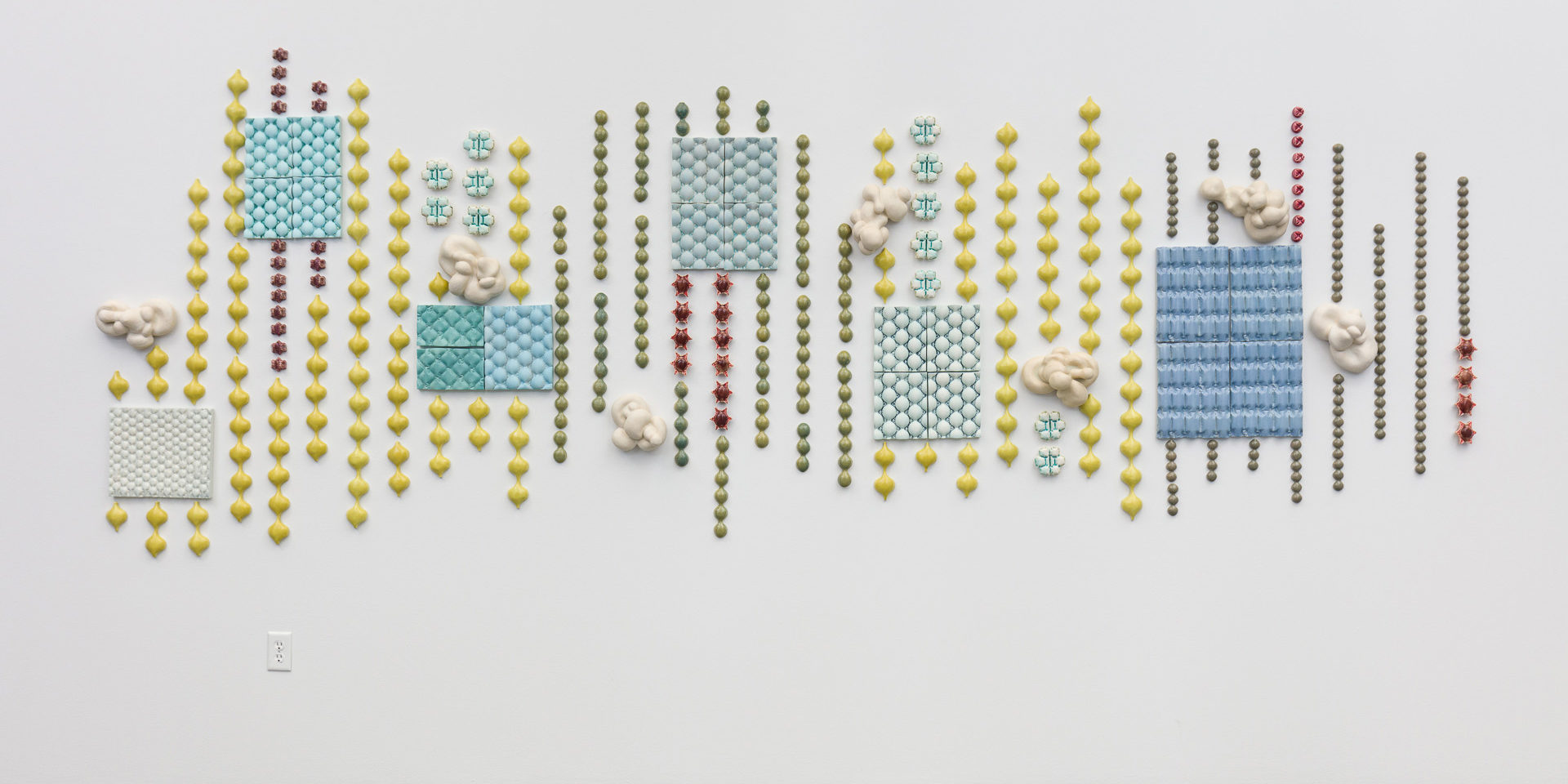
Accumulations, Tsehai Johnson

Ceramics, 8' x 17' x 4", 2024


Synergies: Hybrid Art 
June 4 - August 30

The New Bedford Art Museum presents Synergies: Hybrid Art, a juried exhibition of 19 artists working in all media. This exhibition highlights work that merges artistic disciplines, materials, and technologies to create innovative forms of expression. The exhibition is juried by Amy Lemaire & Nicolas Touron, an artist duo based in Brooklyn, NY, whose collaborative practice explores materiality, form, and the intersection of natural and constructed environments. Working across diverse media, their work bridges the disciplines of sculpture, glass, and installation, creating immersive visual narratives that challenge perception and engage the senses.


JUROR’S STATEMENT

Synergies: Hybrid Art brings together artists whose works operate through combination, transformation, and emergence. As collaborating artists and jurors, we were consistently drawn to practices that move beyond fixed categories—works existing between disciplines, materials, technologies, and ways of thinking. What emerged through the jurying process was not simply a survey of contemporary making, but a portrait of artists actively redefining artistic boundaries.


To us, synergy suggests more than interdisciplinarity. It describes the moment when separate elements converge to create something newly alive—something that could not exist independently. Across the exhibition, materials, ideas, processes, and traditions intersect in unexpected ways: hand skills merge with digital technologies; craft intersects with conceptual inquiry; physical materials interact with virtual environments; and diverse visual languages coexist within new systems of meaning and production.


Many of the selected artists work at the edges of established disciplines, where categories become permeable and new forms emerge through experimentation, hybridity, and exchange. Rather than functioning as oppositions, dualities—human and technological, material and virtual, local and global— generate new possibilities for imagination, inquiry, and critical reflection.


The exhibition reflects a contemporary moment defined by accelerated technological change, ecological awareness, and the constant recombination of information, histories, and forms. Artists are uniquely positioned within this landscape, not only responding to change but envisioning new relationships between systems, materials, and futures. Ultimately, Synergies celebrates artists who embrace uncertainty, cultivate resonance across seemingly disparate worlds, and create space for new forms of connection and emergence.

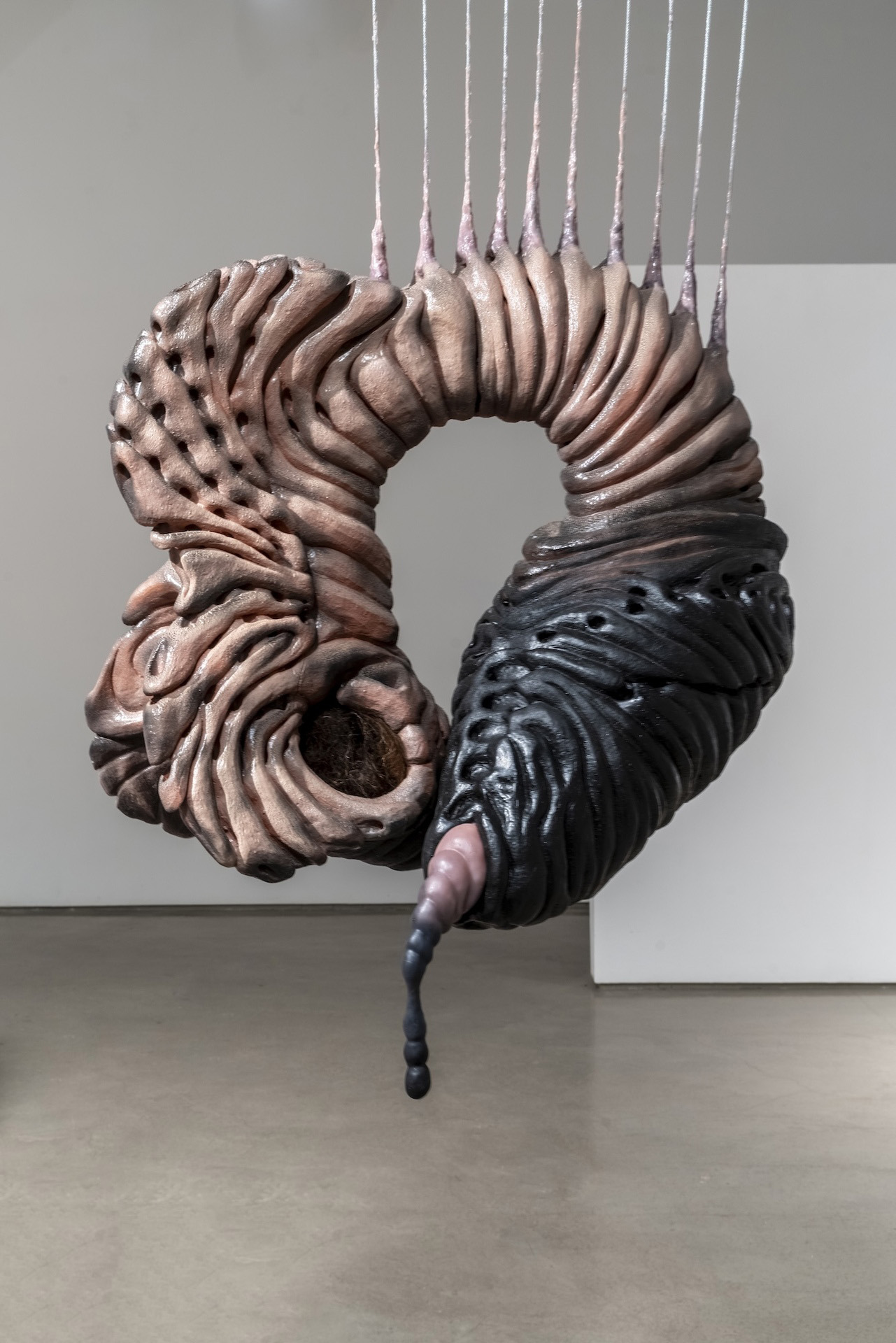
Eva Tellier
Tellier 1

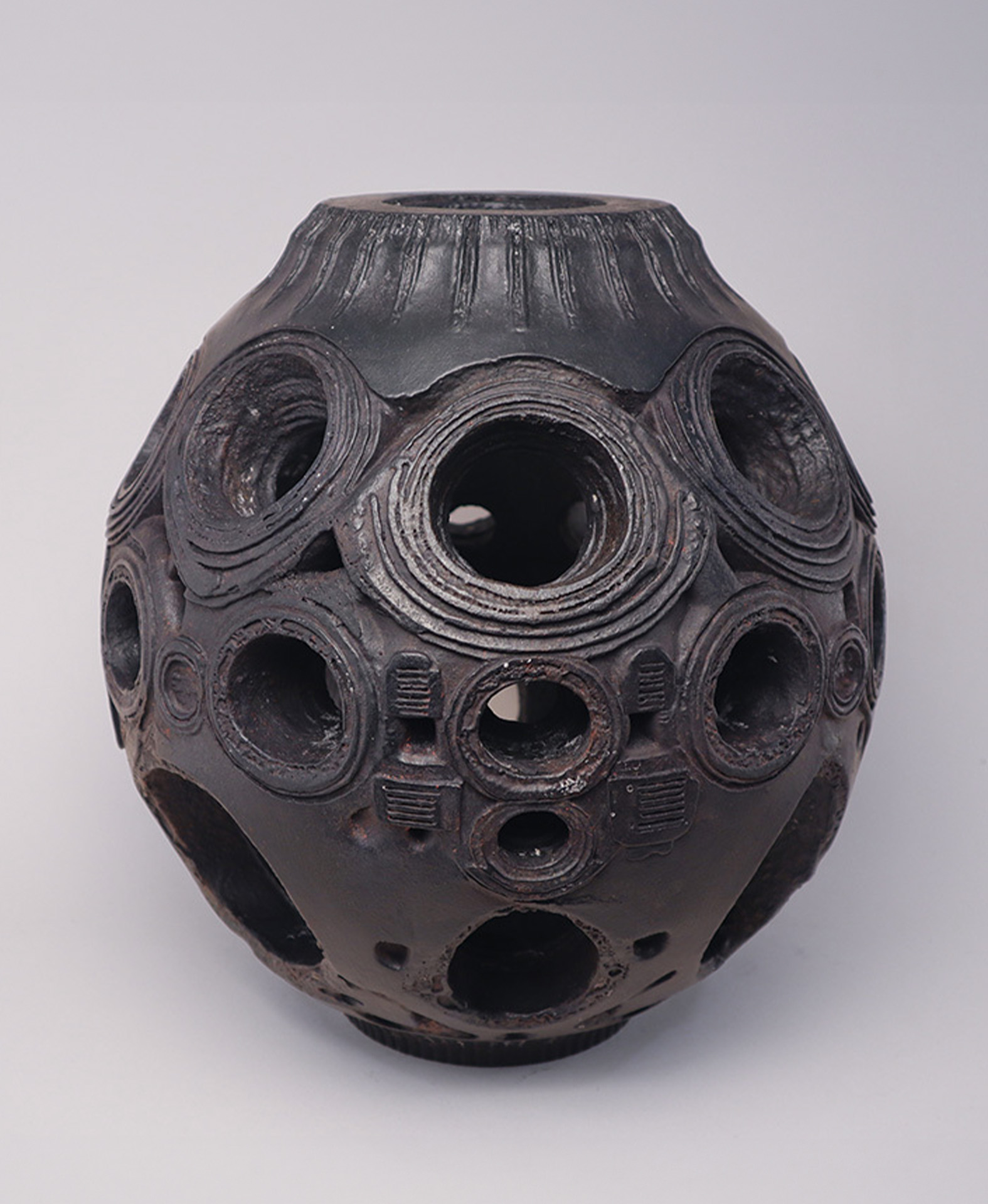
Eva Tellier
Coma, 2025
Ceramics, rubber, silicone, human hair
31" x 32" x 32"

ARTIST STATEMENT
Artist Statement

Inspired by the anatomies of hard- and soft-bodied species and the queer polymorphism of nature, my work imagines the potential of becoming, blending human-made and natural designs. I reimagine coiling as a generative technology to build porous, speculative bodies composed of skin-like materials and hollow clay tubes. These tubes function as anatomical references - simultaneously acting as exoskeletons, flesh, and organs - carved with surgical precision to form orifices that breathe, ooze, and leak. My maximalist aesthetic presents a guttural delicacy and fragility, using decorative elements and their feminine associations to invoke the monstrous feminine. By merging futuristic bodies and artifacts, these queer chimeras celebrate otherness, challenging expectations of the body, femininity, and beauty. Through word-building, both materially and conceptually, I use my craft to question binary structures while reimagining the possibilities of queer identity.

James Labold

Labold

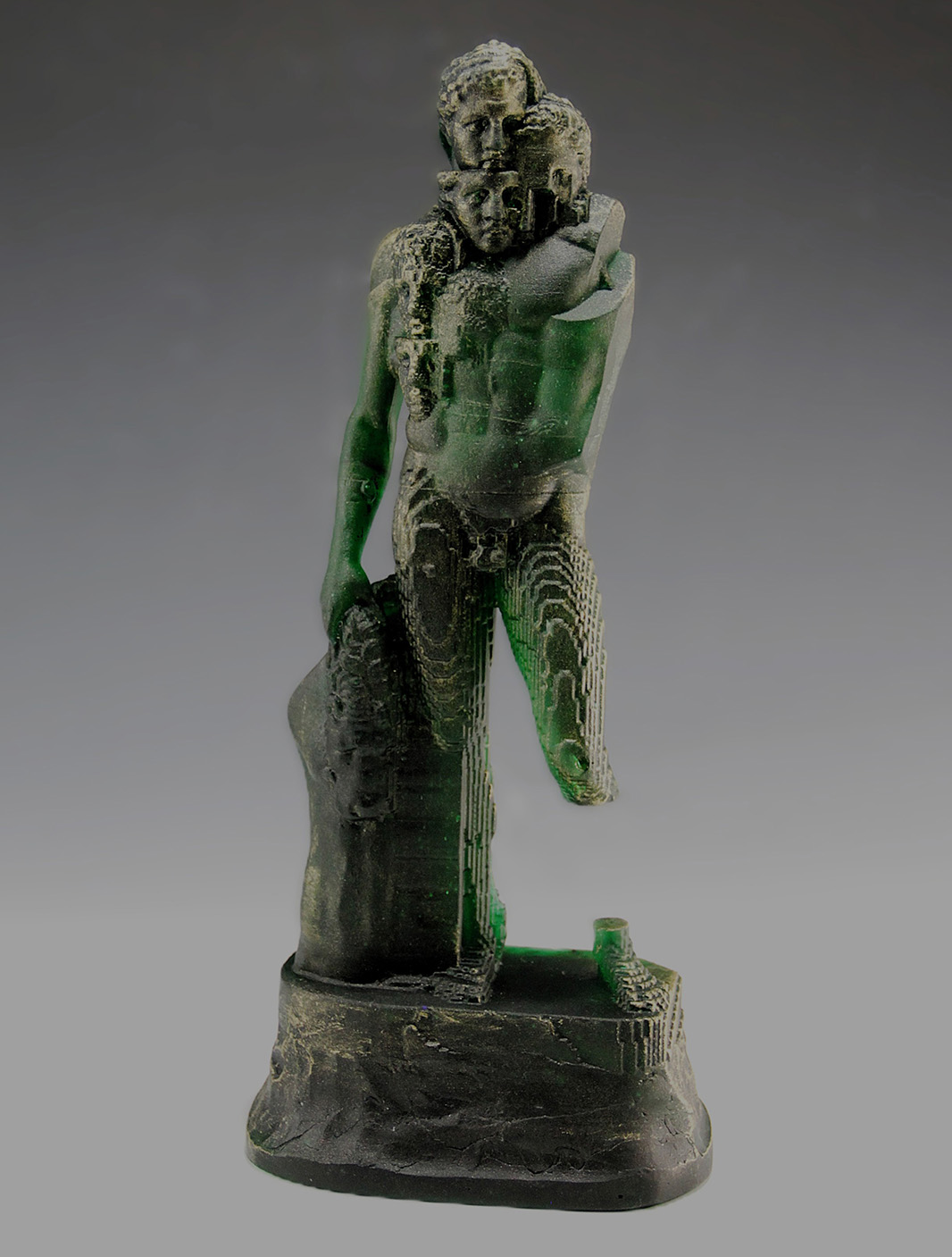
James Labold

Herculean Glitch

Kiln cast glass, mixed media

14" x 6" x 4"
ARTIST STATEMENT
Artist Statement

My work draws on historical imagery to create narratives reflecting on the bridges between past and present culture. I'm interested in the evolution of iconography over time, and how imagery can reinforce and create new cultural narratives. I have been researching 3D printing and incorporated digital fabrication into my analog glass creative practice, merging ancient and contemporary techniques. By utilizing open-source 3D scans of classical sculptures and historic figures, I embrace the accessibility of new technologies while exploring their limitations. These digital copies of historic artworks have become a new, virtual source of found objects. These scans democratize access to works of art around the globe, and at the same time change the way we perceive the analog world. As we enter a new world of AI generated imagery, much of our human interaction is mediated through digital means: notions of what is real and true are shifting before our eyes.

Shrimpton
Bridgewater

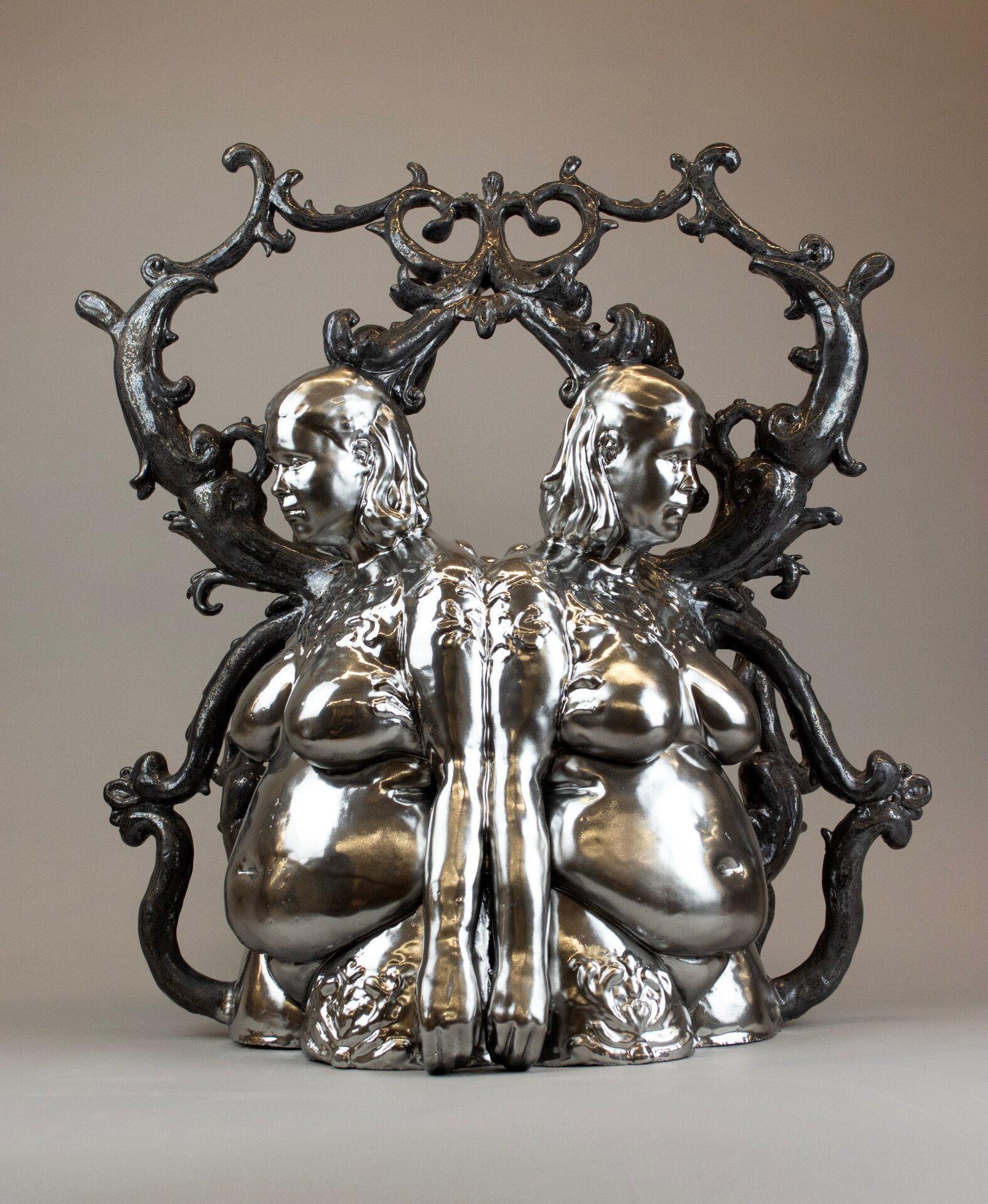
Corran Shrimpton
Buffering, 2024
Ceramic Stoneware, Glaze, and Paint
22" x 24" x 12"

Chad Bridgewater
SDX-01C, 2025
Polylactic acid
14" x 13" x 13"
ARTIST STATEMENT
Artist Statement

My work explores the tumultuous relationship that I and many women experience with our bodies in our beauty- obsessed culture. By drawing on Victorian decor, I highlight the parallels between the constraints faced by women historically and those prevalent today. While the external forms of containment have evolved—from physical barriers to subtler forms of self-regulation—the fundamental pressures on women have remained consistent. Distorted feminine forms illustrate the restriction and contortion of our bodies needed to achieve impossible beauty standards and prompts us to consider our expectations of femininity, their origins, and their effects.

ARTIST STATEMENT
Artist Statement

In his current art practice, Chad Bridgewater combines contemporary digital fabrication with traditional ways of making to create one-of-a-kind art objects exploring function and design. Computer Numerically Controlled (CNC) machines work in tandem with hand finishing to narrow the gap between craft and manufacturing. Influenced by sci-fi, military and industrial aesthetics, many designs imply utility and control.

Mice
Boldon

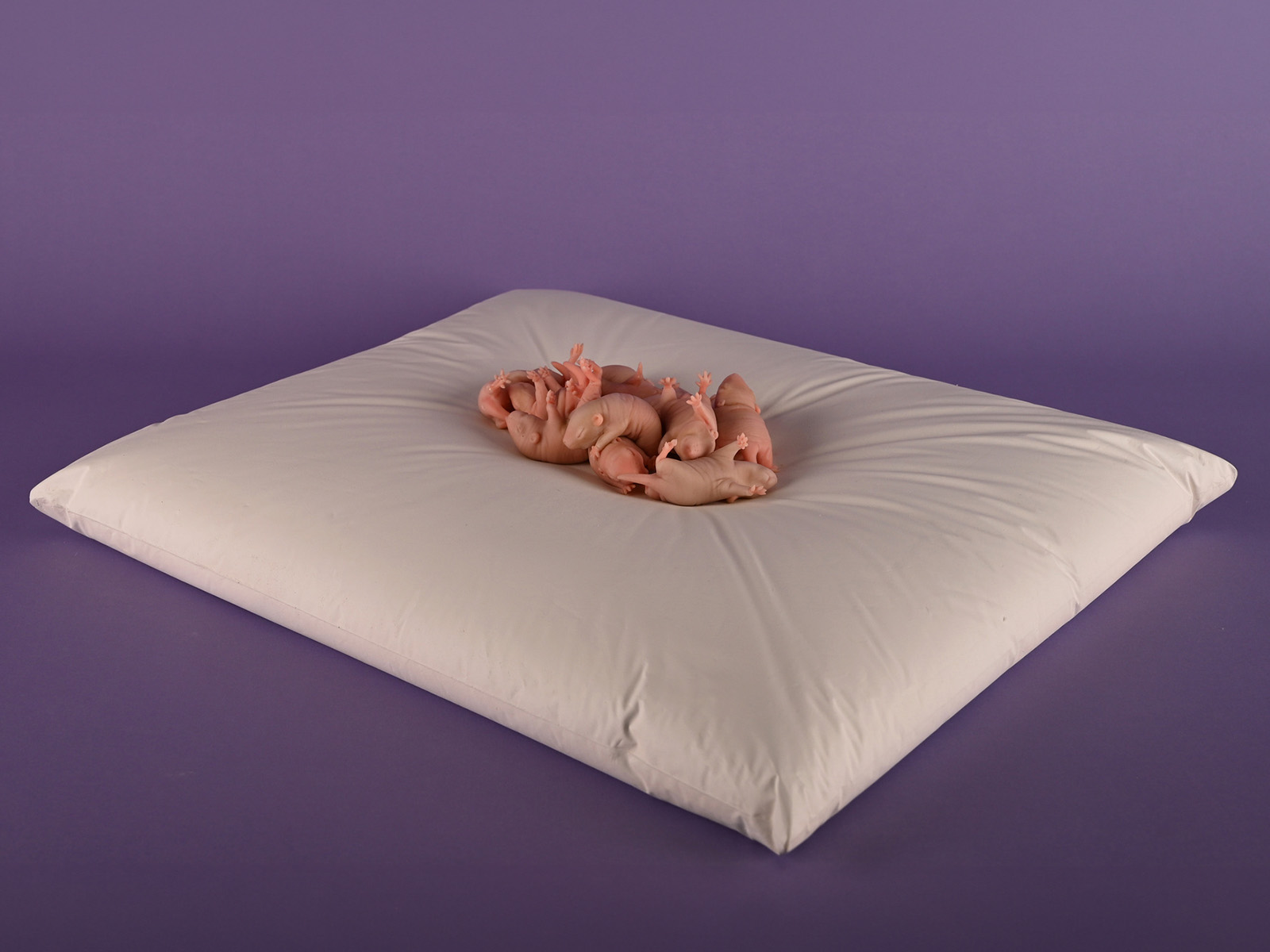
Caterina Urrata
Pillow Fight, 2025
flameworked glass & mixed media
4" x 18" x 16" 

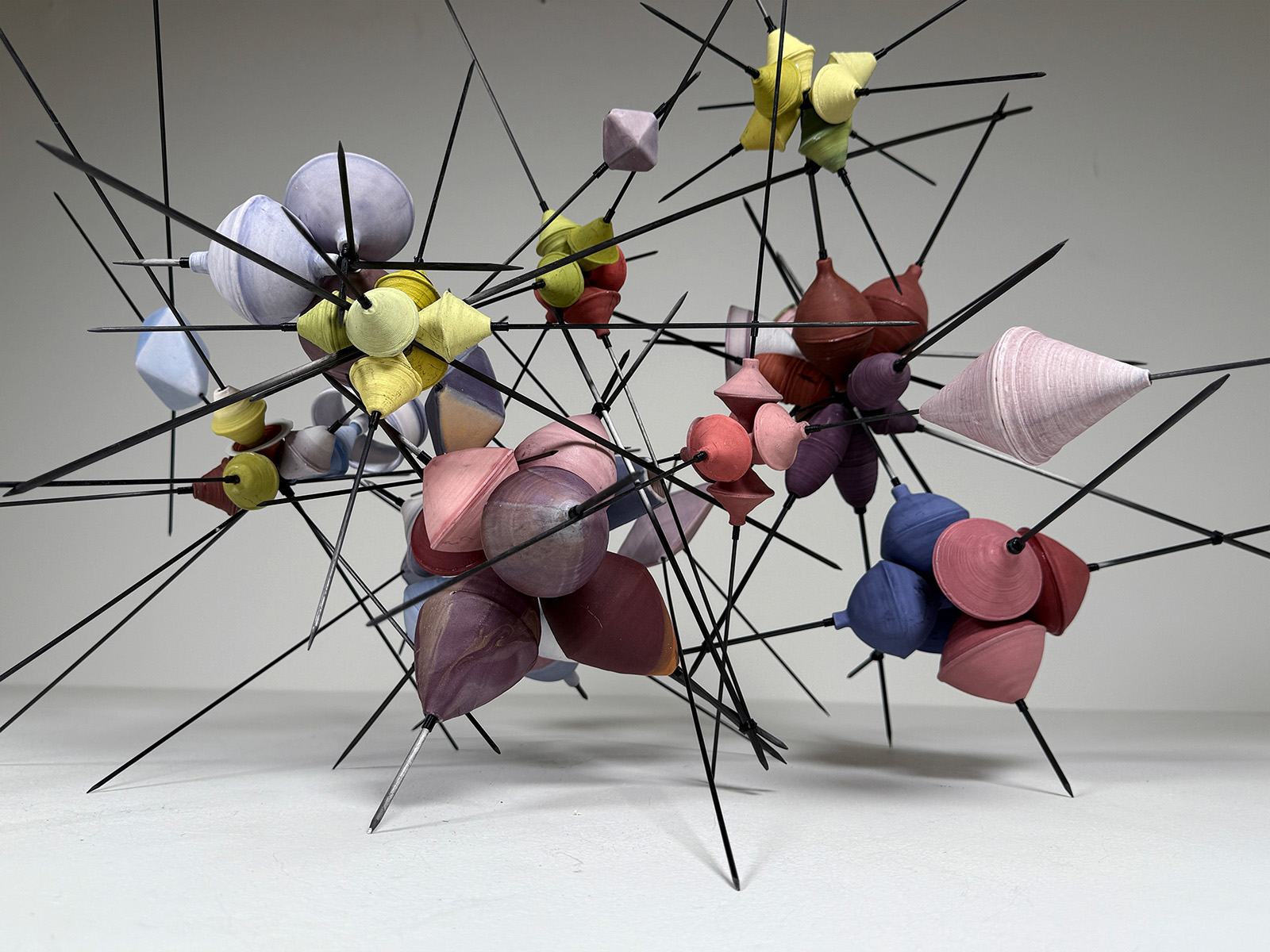
Brian Boldon
Unexpected Bloom 1
Printed Porcelain, Glaze, Carbon Fiber, Stainless Steel, & TPU
18" x 26" x 20"
ARTIST STATEMENT
Artist Statement

Inspired by memories, dreams and nature, I use glass to create playful objects and curious scenes. By utilizing the inherent fragile nature of glass, I aim to make work that evokes a sense of sentiment, wonder and sometimes discomfort. From intricate torch work to large scale kiln castings and hot blown pieces, I use the process best suited to bring each piece to life.

ARTIST STATEMENT
Artist Statement

I imagine landscapes with their own origin story, an intimate universe bound together by positive/negative attractions. Geometry and porcelain become the aesthetic and structural language. Color and form appear weightless. My observations are remembered while making. Oscillating between drawing, painting and sculpture, 2d and 3d mediums become atomized spatially by mechanical means. Illusionary moments and material realities suspend disbelief. 3d printing clay extends my interest in multiples and autopoetics. Organic and haptic, I use technology for creating primitive geometries and self-organizing systems, a call and response between computer and clay. 3d printing extends my ability to make clay feel like what I remember. Color and form in space is a painting practice for me. I mix liquid glaze from primaries of blue, red and yellow. Color is directly observational flowing within landscape experience. Unrepeatable by design, color becomes a time sensitive language in the moment of making.

Screenshot 2026-04-07 at 12.18.02 PM
Troxell

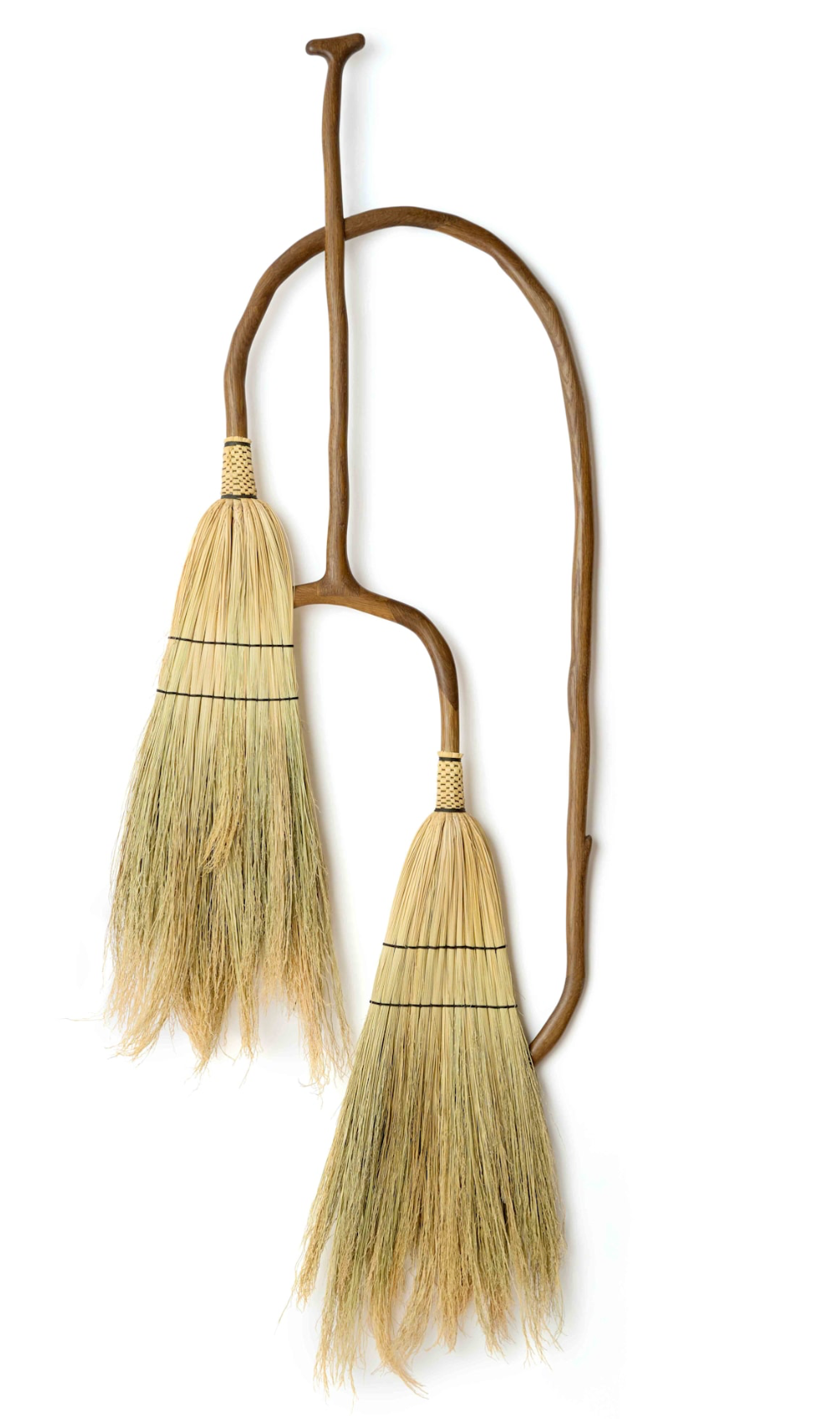
Aspen Golann
Circle Broom (2025)
Fumed oak, broomcorn, linen
76" x 28" x 5.5"

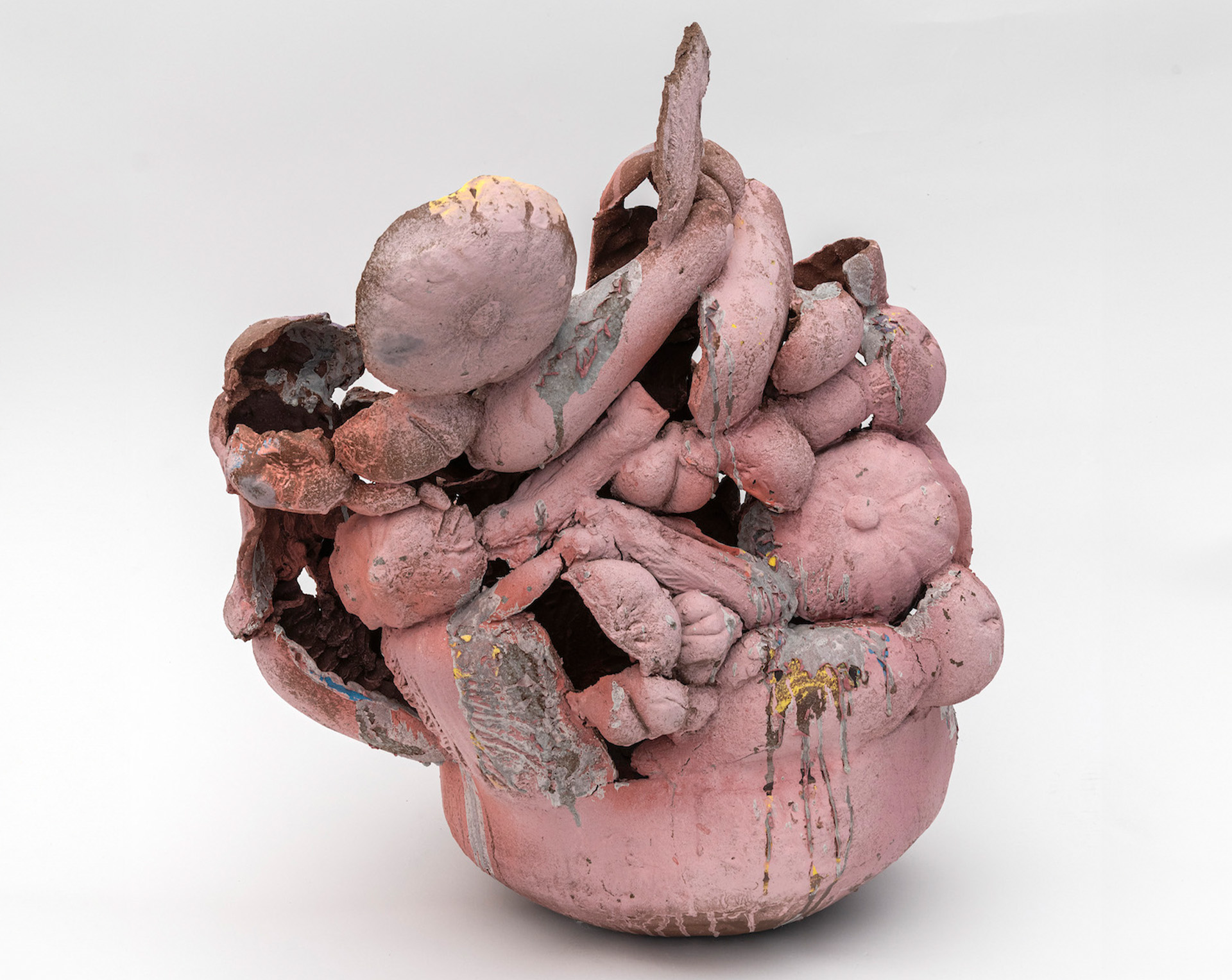
Grace Troxell
Self Portrait as Kabocha
Clay casts; kabocha, beet, breasts, fennel, carrot, squash
28" x 25" x 22"
ARTIST STATEMENT
Artist Statement

As a marginalized woodworker trained in 17th-19th century techniques, I confront the moral complexity of replicating forms once used to glorify power in early America. Can their beauty be separated from the racism, classism, and misogyny of that time?

My response is playful furniture and decorative objects that appropriate early American aesthetics, merging them with contemporary forms to reveal the social injustices embedded within craft history. Using inlay, marquetry, glass enameling, and other traditional methods, I create works that both critique and celebrate this legacy. My small-scale sculptures reinterpret domestic objects-brushes, utensils, brooms-as expressive, symbolic tools. Technically traditional yet formally contemporary, they fuse utility and sculpture, discipline and play, craft and critique.

ARTIST STATEMENT
Artist Statement

I think about vegetables a lot. I love them, I worship them, I want them to heal me, I want them to heal others, I worry they've lost their taste, their individuality, what makes them special, they are conforming, we are making them conform. In The Gleaners and I, Agnes Varda sorts through a pile of cast away potatoes, she zooms in on a potato that looks like a heart. She gets me.

In Yuriko Saito's book Aesthetics of the Familiar: Everyday Life and World-Making, Saito proposes embracing more misshapen or ugly vegetables, approximately 1/3 of vegetables are discarded before they arrive at supermarkets for aesthetic rather than nutritional reasons. By casting my family and vegetables, I am making a speculative archaeology trying to discover and reimagine the future. By casting and re-using molds I am insisting on the presence of people and food, objects that should nourish but do not.

Hietala
Swift

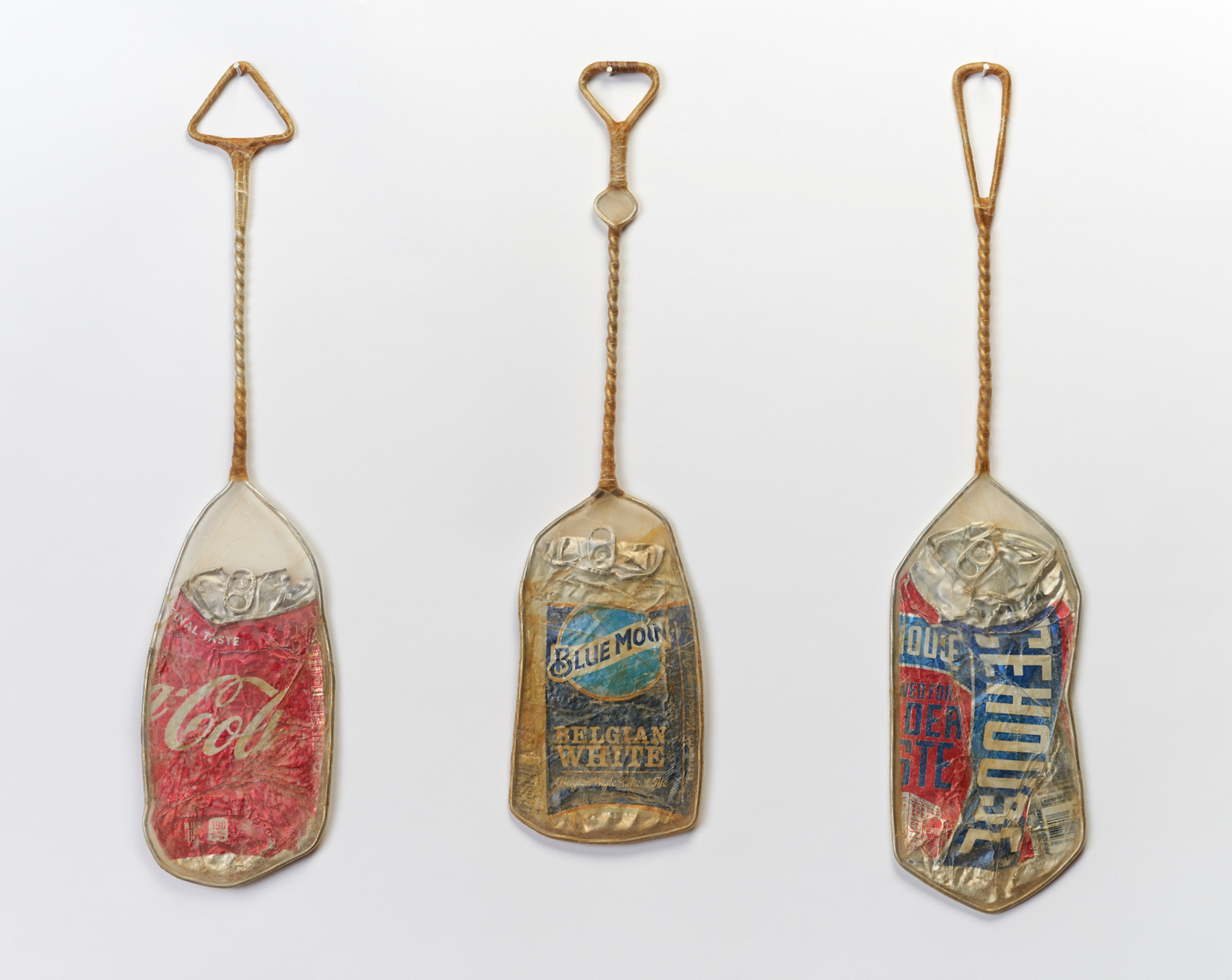
Heather Hietala
Where Are We Going?
Gut, Upcycled Aluminun Electrical Wire, Found aluminum cans
18.5" x 20.5" x .5"

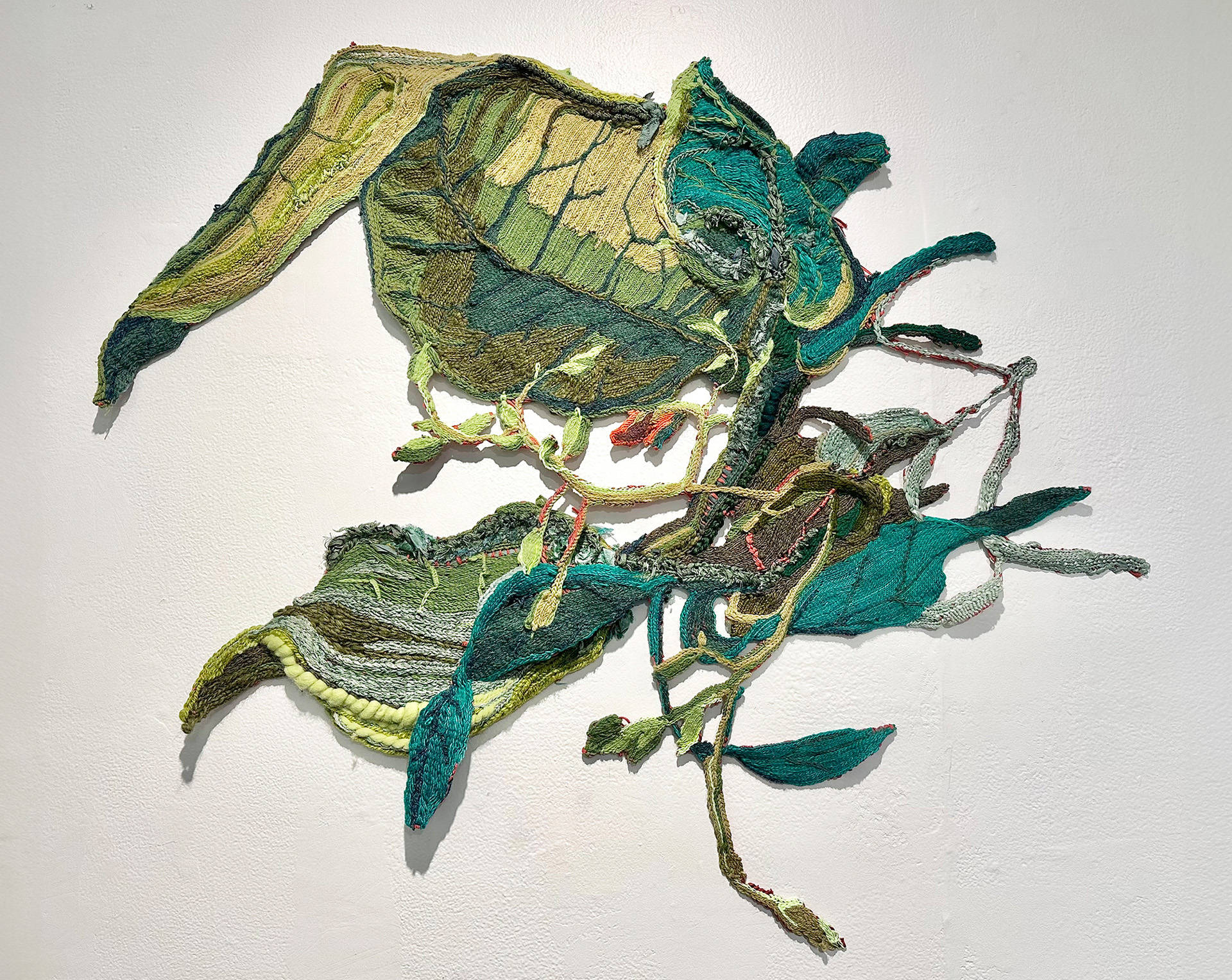
Sarah Swift
Maho Bay
Recycled fruit bags, Hand-dyed fibers, silk, wool
42" x 35" x 1"

ARTIST STATEMENT
Artist Statement

My work distills and expresses my life's journey. The vessel in its many forms is my enduring muse - seedpods, canoes, paddles, boats, and weaving shuttles drawn from personal history. These forms symbolize both the self and the act of passage. As metaphors of interior and exterior, protection and containment, they hold both universal and personal meaning. Guided by intuition and experience, I explore form, purpose, and design through experimentation with clay, wire, cloth, gut, paper, and natural materials from my orchard garden. My practice centers on relationships: those found in life and those revealed through materials. Dualities; hard and soft, 2D and 3D, create dialogues of contrast and connection. Negative space and shadow extend these conversations, suggesting the quiet energy between individuals. My work seeks to evoke a sense of timelessness, offering a pause, a moment of connection; serving as ballast in a world that often feels tumultuous and out of balance.

ARTIST STATEMENT
Artist Statement

My recycled fiber installations utilize raw and recycled materials sourced from community donations, secondhand stores, fair-trade co-operatives, or industry deadstock fibers (which contributes to some of the highest volumes of waste on the planet.) I incorporate unsustainable materials like plastic bags, drinking straws, metal can tabs, fruit netting, plastic wrap, acrylic based yarns, and fabrics like old bed sheets or clothing that can no longer be donated. I also hand-dye upcycled fabrics using natural dye processes rooted in indigenous and artisan traditions I learned in New England, Morocco, and the American Southwest. I find this practice creates a deeper understanding and respect of the materials provided by the earth that have been used for centuries, primarily by women, in the crafts of weaving and dying. My hope is to inspire others to be more resourceful with their everyday items, and to challenge priorities within our consumer driven society.

CLICK TO LEARN ABOUT EACH ARTIST