REEL TALK: FILM NOTES

Anthro Movies-2

Browse Professor Mocha's past film notes to revisit key themes, ideas, and conversations.

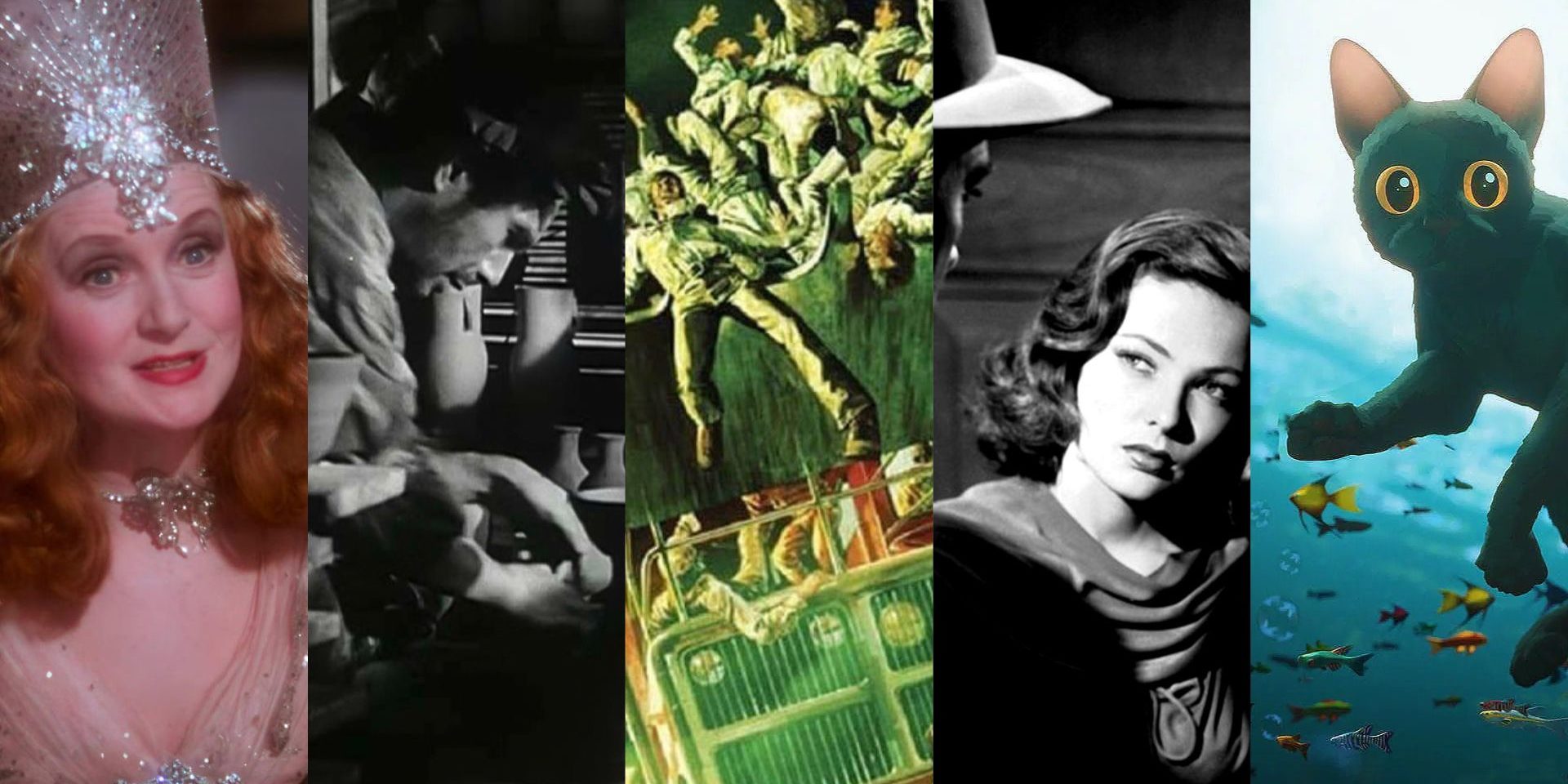
Ugetsu Monogatari (Kenji Mizoguchi, 1953)

Uprooted by civil war, two peasant couples are split apart when the men – against the counsel of their wives – leave their families in search of greater fortune.

Flow(Gints Zilbalodis, 2024)

A wondrous journey through realms natural and mystical, FLOW follows a courageous cat who teams up with a capybara, a lemur, and a dutiful Labrador retriever to survive the perils of a newly aquatic planet. The Academy Award winning film is a thrilling animated spectacle and a profound meditation on the fragility of the environment and the spirit of friendship and community.

VIEW NOTES

FLOW (Gints Zilbalodis, 2024; 85 min)

– Mocha J. Herrup, PhD

Flow's director, Gints Zilbalodis, is a quintessential "cat person." Like his cat protagonist, Zilbalodis likes to be alone. Once lacking confidence and strong communication skills, the now-celebrated director was drawn to animation early on because it was a medium he could explore independently.

Hailing from Latvia, which has no animation school, Zilbalodis is completely self-taught. He learned animation using publicly available resources and, while making his first feature-length film, Away, also taught himself sound design and basic music composition.

Like the cat in Flow, who, when faced with flood and famine, must go against his feline nature and cooperate with other animals to survive, Zilbalodis also had to rise to the occasion.

"I wanted to tell a personal story about my experience of figuring out how to work with others because I used to work by myself. This is the first project where I'm working with a big team and a proper budget. I had some anxieties about doing that, and I thought it would be a good idea for a story to express these feelings, which are still very fresh in my mind."

New York Times interview, 2025

Many who identify as "cat people," as the stereotype suggests, enjoy solitude. Reading, quiet, and independence are our "me, myself, and I."

And like Zilbalodis, the protagonist cat, and frankly everyone on the planet, no one can survive on their own. During the best of times, humans require cooperation. And now, as the changing global climate brings floods and fires with increasing frequency, only massive collective action can turn the tides.

Flow's visuals are stunning, and the film could have won its Golden Globe and Academy Award on the strength of its animation and music alone. But what makes this film soar is its commitment to both beauty and devastation.

The protagonist cat is afraid of water but must overcome that fear and jump into a wooden boat where an ever-friendly capybara waits. Along the way they encounter a golden Labrador, a ring-tailed lemur, a secretarybird, packs of other dogs, herds of deer, fish, and even whales.

Not all of the animals are as kind and cooperative as the capybara. Some are outright greedy and selfish, choices that may prove either self-defeating or self-sustaining.

It's a choice. It's always a choice.

Will we have the courage to jump in the boat? Who will be kind, and who will be cruel?

SOYLENT GREEN (Richard Fleischer, 1973; 97 min)

SOYLENT GREEN portrays a crumbling world beset with dying oceans, year-round humidity, and worldwide shortages of food, water, and housing. In New York City’s population of 40 million, only the elite can afford spacious apartments, clean water, and natural food in walled-off communities patrolled by armed guards. Released in 1973 and set fifty-three years in the future in 2022, what was once science fiction is now documentary. In one of his most memorable performances, Charlton Heston plays an NYPD detective tasked with investigating the murder of a wealthy and influential board member of the Soylent Corporation. Riveting and also campy, SOYLENT GREEN is an iconic sci-fi classic.

This program is supported in part by a grant from the New Bedford Cultural Council, a local agency which is supported by the Massachusetts Cultural Council, a state agency.