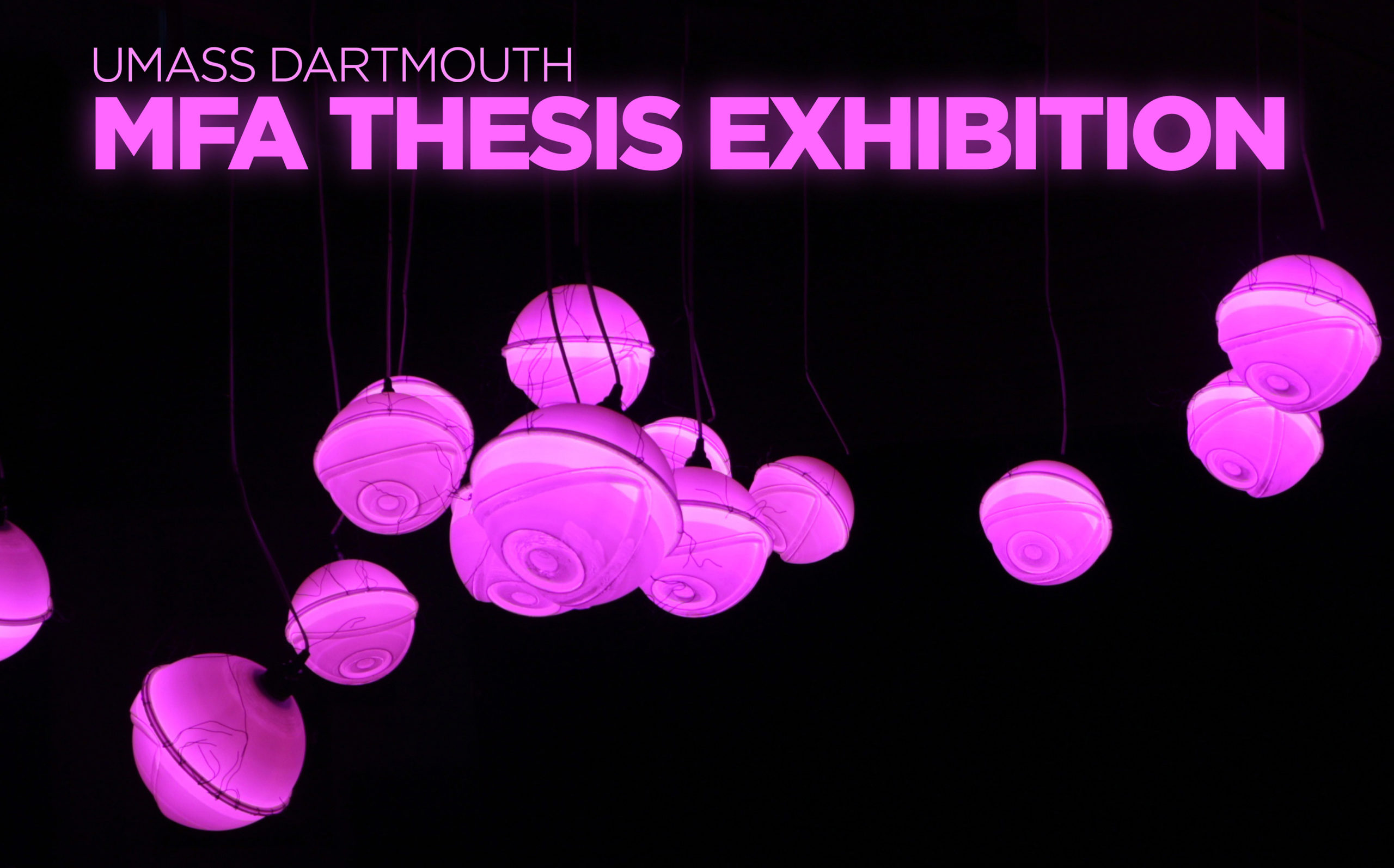
Ali Masoumzadeh, Witnesses, 2025
3D printers PLA, light bulbs, wires
UMASS DARTMOUTH 2026 MFA THESIS EXHIBITION
APRIL 9, 2026 – MAY 14, 2026
Alison Bergman
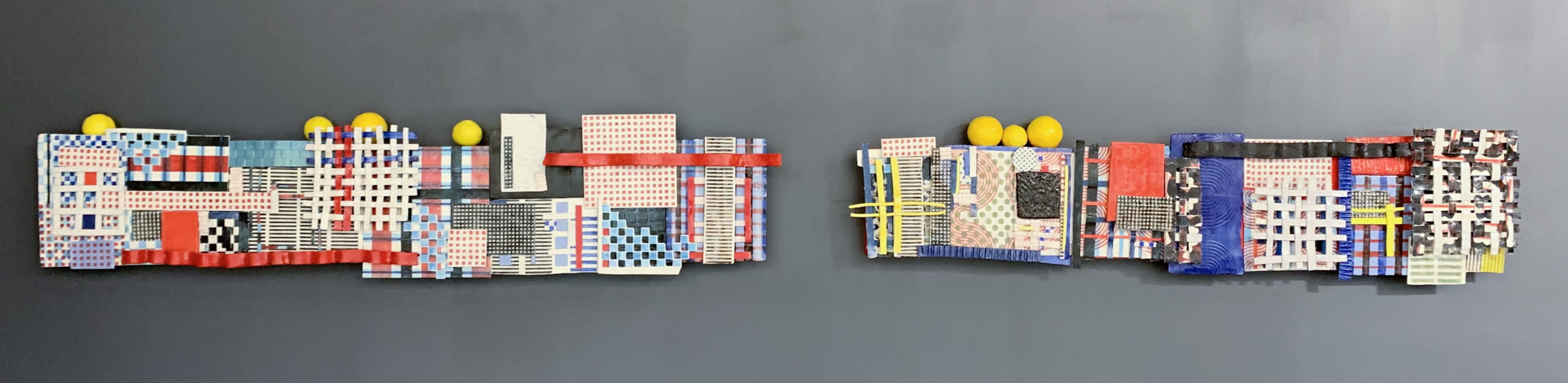
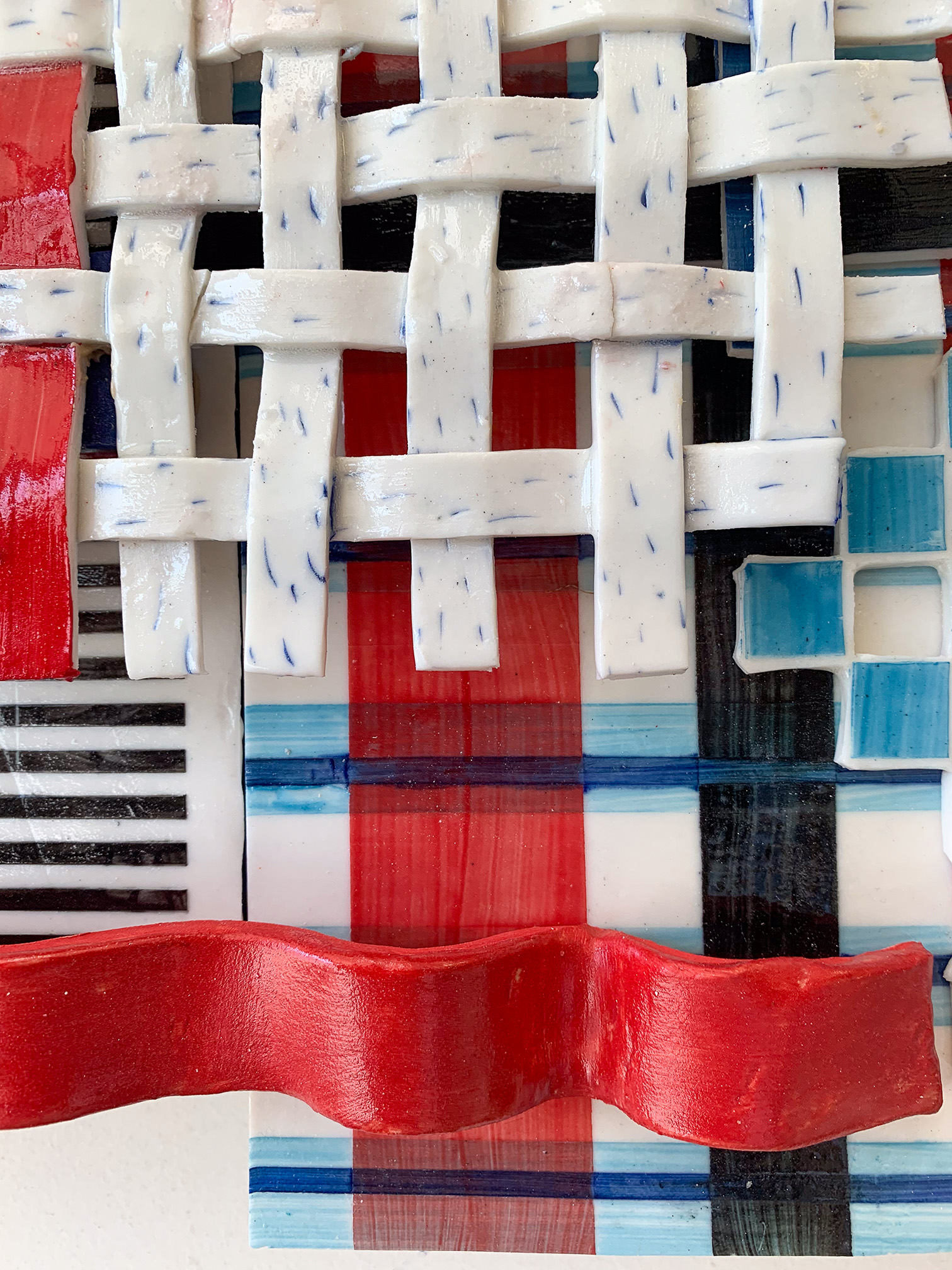
Froebelian Weavers, 2025
Porcelain, stoneware, painted Wood
Each piece is 5 x 13 x 5 in.
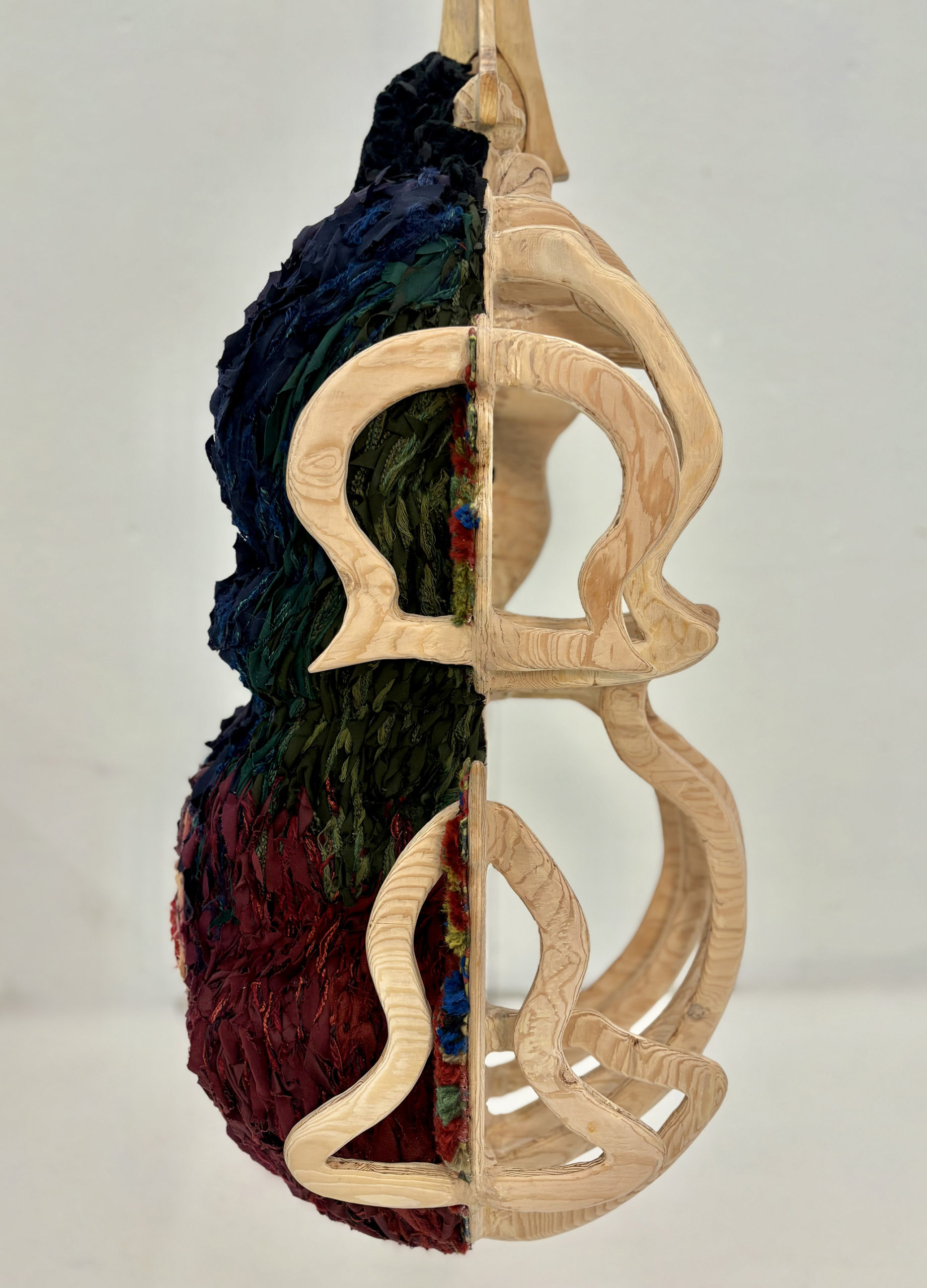
Arghavan Booyeh
She, 2025
Wood, fabric, wool and cotton yarn, paint, foam
81 x 18 x 17 in
Alison Bergman is an educator and ceramic artist living in Vermont’s Northeast Kingdom. She owns the small art gallery Art & Joy in St. Johnsbury, Vermont, where she exhibits her own work alongside the work of friends and fellow artists. Bergman holds a BFA in Film, Video, and Animation from the Rhode Island School of Design, a MAAE from the School of the Art Institute of Chicago, and a Post-Baccalaureate in Ceramics from UMass Dartmouth. She is currently completing her MFA in Ceramics at UMass Dartmouth. Bergman has received the Graduate Fellowship in Community Engagement at UMass Dartmouth and the Learning in Arts & Culture Fellowship at the Vermont Studio Center, which culminated in an exhibition at the Vermont Studio Center.
Through a hybrid practice that merges sculpture, painting, printmaking, fiber, and installation, I use space as a medium to create fluid environments where printed clay forms, woven forms and painted walls interact, emphasizing lightness, acceptance, and the possibility of joy. My ceramics practice explores how joy can function as a deliberate material response to breakage, both lived and literal, through color, repetition of pattern and form, and acts of metaphorical and physical repair. Individual ceramic elements are assembled, rearranged, and placed in dialogue with painted walls, allowing color and pattern to move between surface and object while the installation itself remains open to change. This fluid relationship between wall, sculpture, and space reflects an ongoing process of improvisation and reconstruction. The work seeks to transform moments of imperfection into opportunities for renewal, creating environments where repair and readjustment become generative and where the possibility for joy remains present.
Arghavan Booyeh is an Iranian-born fiber artist whose work blends technical craftsmanship, storytelling, and cultural memory. Currently completing an MFA in Fibers at UMass Dartmouth, Arghavan also teaches Weaving and foundation-level 3D Form and Space courses. With a master's degree in law from China, her artistic practice centered on social justice, women's rights, and equality. Arghavan’s sculptural works are rooted in fiber techniques such as weaving and expanded through diverse materials, honoring women as agents of strength and transformation. Recent exhibitions include the Convergence International Fiber Conference in Wichita, Kansas; the New Bedford Art Museum; the Menino Arts Center, MA; and the New Bedford Whaling National Historical Park, where Arghavan completed a three-month artist residency (2025) alongside a series of community focused workshops.
My practice centers on fiber art, a medium that lets me merge techniques with storytelling rooted in my cultural heritage. Textiles embody the duality of women's artistry, delicate yet resilient, soft yet powerful. Grounded in my background in law, my work engages themes of human rights, women's rights, and equality. I use the Cypress (Sarv) and paisley (Botteh) as metaphors for heroic women fighting for freedom in Iran. Through symbols deeply tied to Iranian history, my sculptures reflect transformation, grief, resistance, and strength. I honor paisley’s nomadic of transformation as a symbol of ongoing resistance and evolving hope. A central paradox in my work is the expectation that women must do everything at once mother, professor, artist, activist. Through maximalism and hyperbolic forms, I highlight this resilience while exposing how women bend under these pressures, often without support. My pieces hold both extraordinary capability and the unsustainable burden within the same visual space. Despite the weight of injustice, the fiery spirit endures; my weaving honors the bravery and hope of a generation challenging restrictive beliefs. Each thread becomes a quiet protest for autonomy, equality, and compassion echoing a lineage of strength that transcends borders.
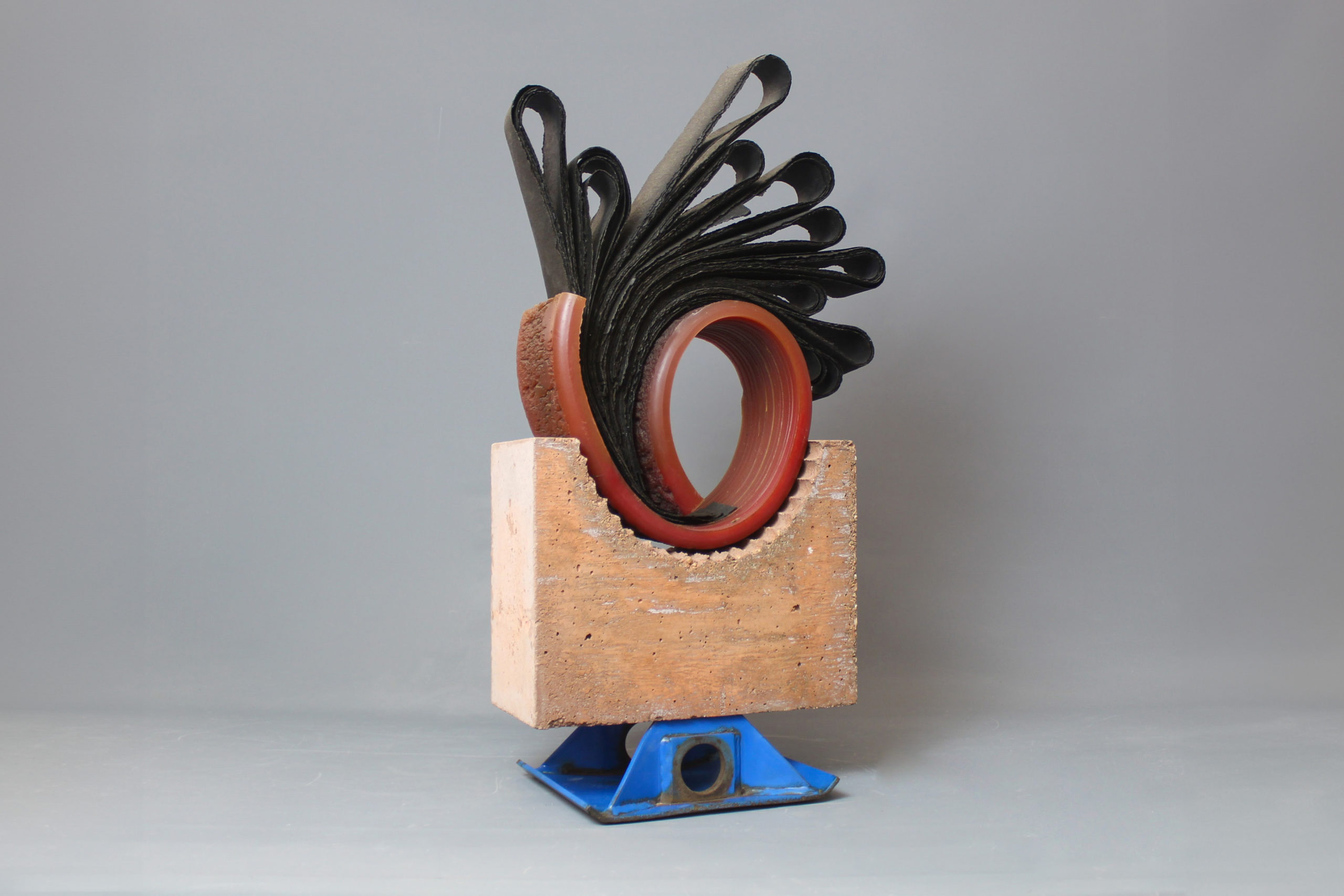
Immer Cook
Come to Grips, 2025
Concrete, polymer tire, tar paper, steel
40.5 x 18 x 11.5 in
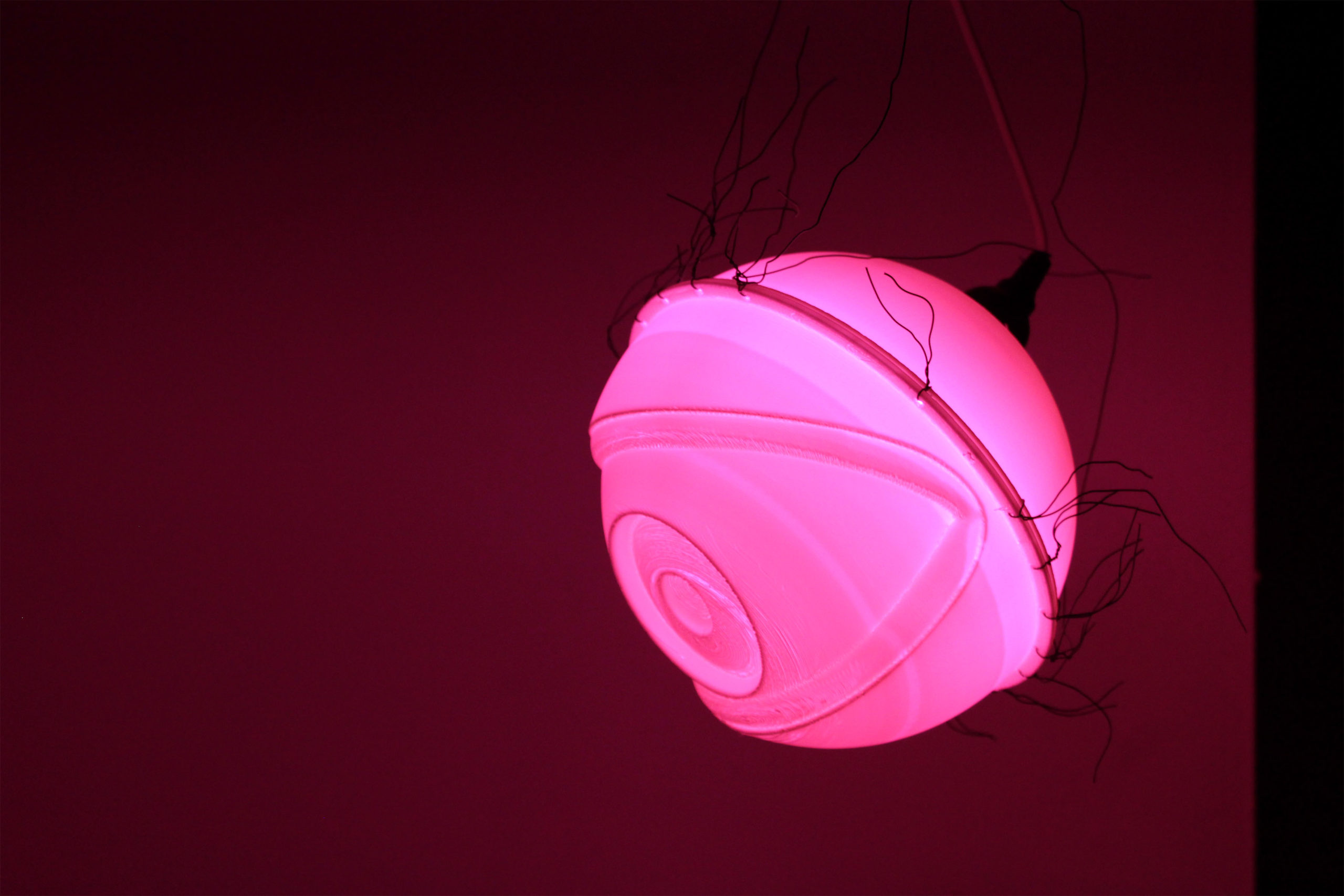
Ali Masoumzadeh
Witnesses, 2025
3D printers PLA, light bulbs, wires
Variable Dimension, each eyeball: 9 in in diameter
Immer Cook is a ceramicist and sculptor from Easthampton, Massachusetts, with a background in modern dance and landscape construction. He received his B.A. in Creative Arts from Bradford College in Haverhill, MA in 1996 where he was given the George Hasseltine Art Prize and Richard Kenny Memorial Art Purchase Award. He is currently a Ceramics MFA candidate and Teaching Fellow at UMass Dartmouth, creating assemblages combining hand-built ceramics and found materials that explore a spectrum of permanence, stability, gesture and craft.
Ali Masoumzadeh is an Iranian born artist whose work is rooted in surreal narratives that alternate between drawing, painting, and sculptural forms. Projects during his MFA studies blend traditional and digital methods that include interactive installations, sculptural drawings, and a graphic novel that explores transformation and the grotesque. With a BFA in Painting from Urmia University, Iran, Ali Masoumzadeh currently holds the prestigious Distinguished Artist Fellowship at UMass Dartmouth. Ali has exhibited his work in both solo and group settings regionally and internationally and has received media recognition for his work in The New Bedford Light, 2023, Arts Illuminated, 2025 and NovumArtis, 2025.
My work has evolved from narrative, story-telling images into pieces that are increasingly aware, present, and emotionally grounded. Although rooted in fiction, my practice draws heavily from real experiences, feelings, and personal reflections. Many of my works initially appear grotesque, yet they open into layered emotional spaces where empathy remains central. I see drawing and painting as capable of becoming sculptural, and spatially aware. Throughout my MFA, I have pursued this belief by building three-dimensional canvases, merging sculptural forms with painted surfaces, creating an illustrated book meant to be experienced over time, and developing an interactive room composed of rotating panels for my thesis. This approach has allowed me to see, compose, and build differently, shaping a practice that continues to expand my understanding of form and narrative. My work is in conversation with artists like Picasso, David Hockney, and Goya, yet it is equally informed by figures such as Darvish Khan Esfandiarpour whose Stone Garden stands as a monument to memory, loss, and resilience, and by many contemporary Iranian artists whose influence grounds my connection to home. Through this merging of artistic lineages, I explore themes of war, loss, and cultural identity, forming a bridge between traditions and contemporary experience.
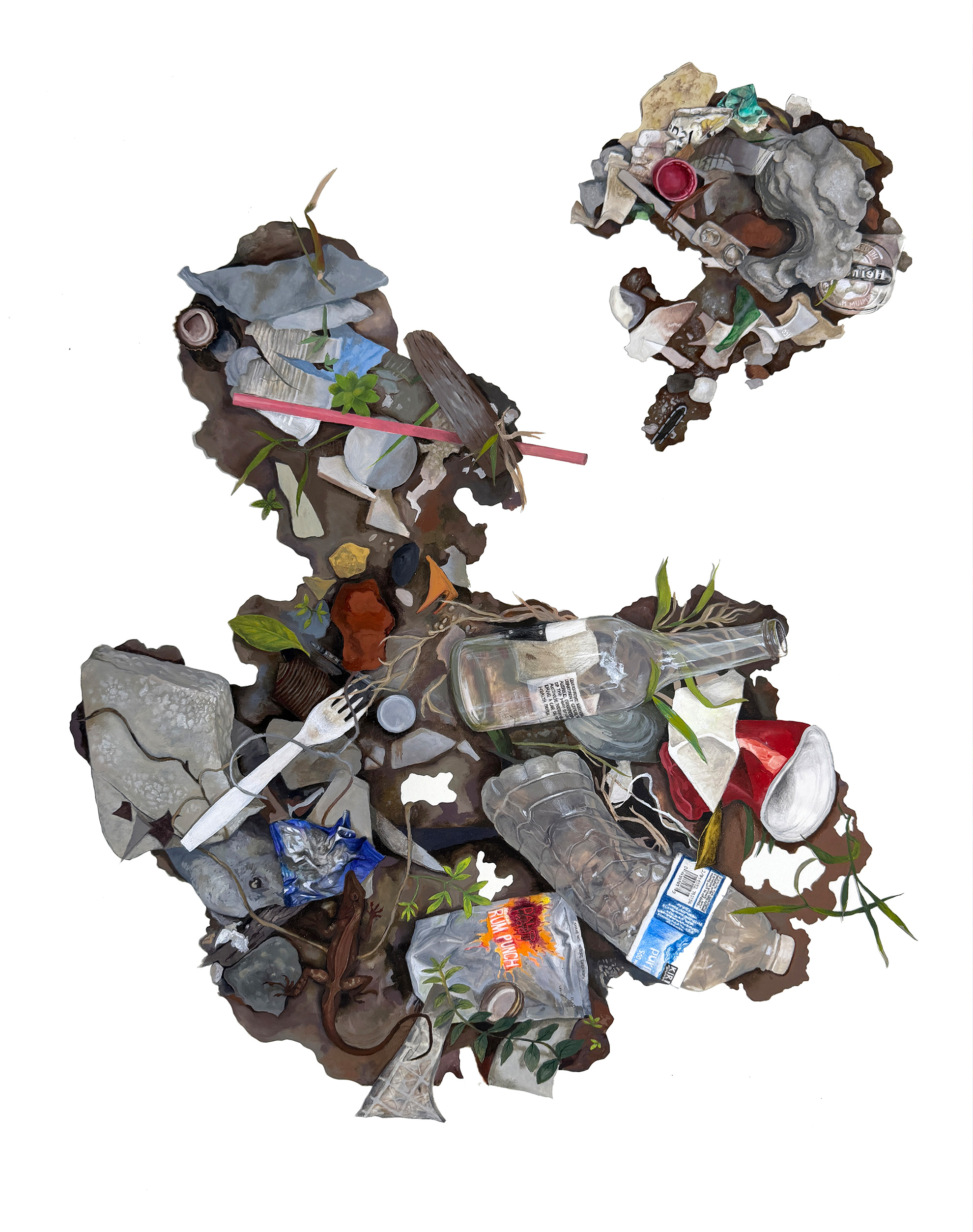
Maya August Palmer
Trove: An Ecology of Deposition, 2025
Oil and colored pencil on Dura-lar plastic
30 x 24 in
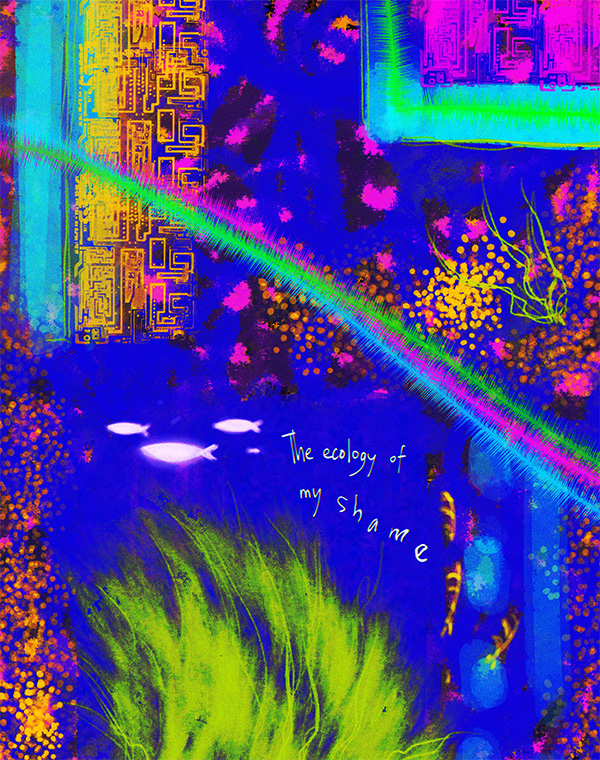
MITRAAVRS
The ecology of my shame, 2026
Digital image
Maya August Palmer is a painter based in Newport, Rhode Island. Born in Los Angeles, they spent the first half of their childhood in California and the latter half moving throughout New England. They received a BA in Biology from Hofstra University and worked in Neuroscience for a number of years before pursuing an MFA in Painting at UMass Dartmouth. Palmer’s current work is informed by their scientific background and employs the language of realism, as well as human-made and natural clutter, to explore relationships between space and ecology.
I love the scatter of matter; the trash of everyone. I am interested in liminal ecosystems where the accumulations of discard both organic and inorganic collect. There is presence of a subject even when it is absent – the ghost of us remains with what we leave behind. The cradle to grave of objects, the transformation and transfer of matter and energy, nothing is created or lost just changed. I am drawn to the forgotten or unused parts of a gallery or space floors, corners, back rooms, and awkward places. Like natural selection, I inhabit the niches that have yet to be exploited. Because my subjects are discarded and no longer deemed important for use, I want my work to congregate in spaces along the margins. The correct and ethical uses of land and space in our world is entangled with privilege and power, and is becoming an increasingly important question in the context of the climate, energy usage, housing, agriculture, and private property. I want to think about underutilized and overlooked spaces and how they take on agency and a life of their own. They encroach into our personal space over time, quietly there asserting themselves, always a part of our world and now made seen. I want my work to not only witness the presence of the overlooked, but to challenge the boundaries of what we consider alive, worthy, or beautiful. In a world increasingly shaped by human discard and interference, I hope to trace new ecologies—intimate, tangled, and quietly defiant—where decay becomes memory and the mundane holds transcendence.
അനാമിക പൊന്തൻ, better known as MITRAAVRS, is a multimedia artist and educator exploring memory, fragmented identity, and non-linear narratives through hypertext and experimental web-based formats. Born in India and raised across Oman and Dubai before relocating to the United States at twenty-three, their transnational upbringing shapes an interest in shifting selves and unstable temporalities within narrative form. Holding a BFA in 3D Modelling and Animation from SAE Institute Dubai, they merge drawing, web technologies, and creative coding to build hybrid narrative spaces and interactive systems. They have exhibited work with New Bedford Arts Illuminated and Hatch Street Studios. MITRAAVRS has also worked as a Gallery Assistant and currently serves as a Teaching Fellow at UMass Dartmouth, supporting students in developing foundational digital media skills.
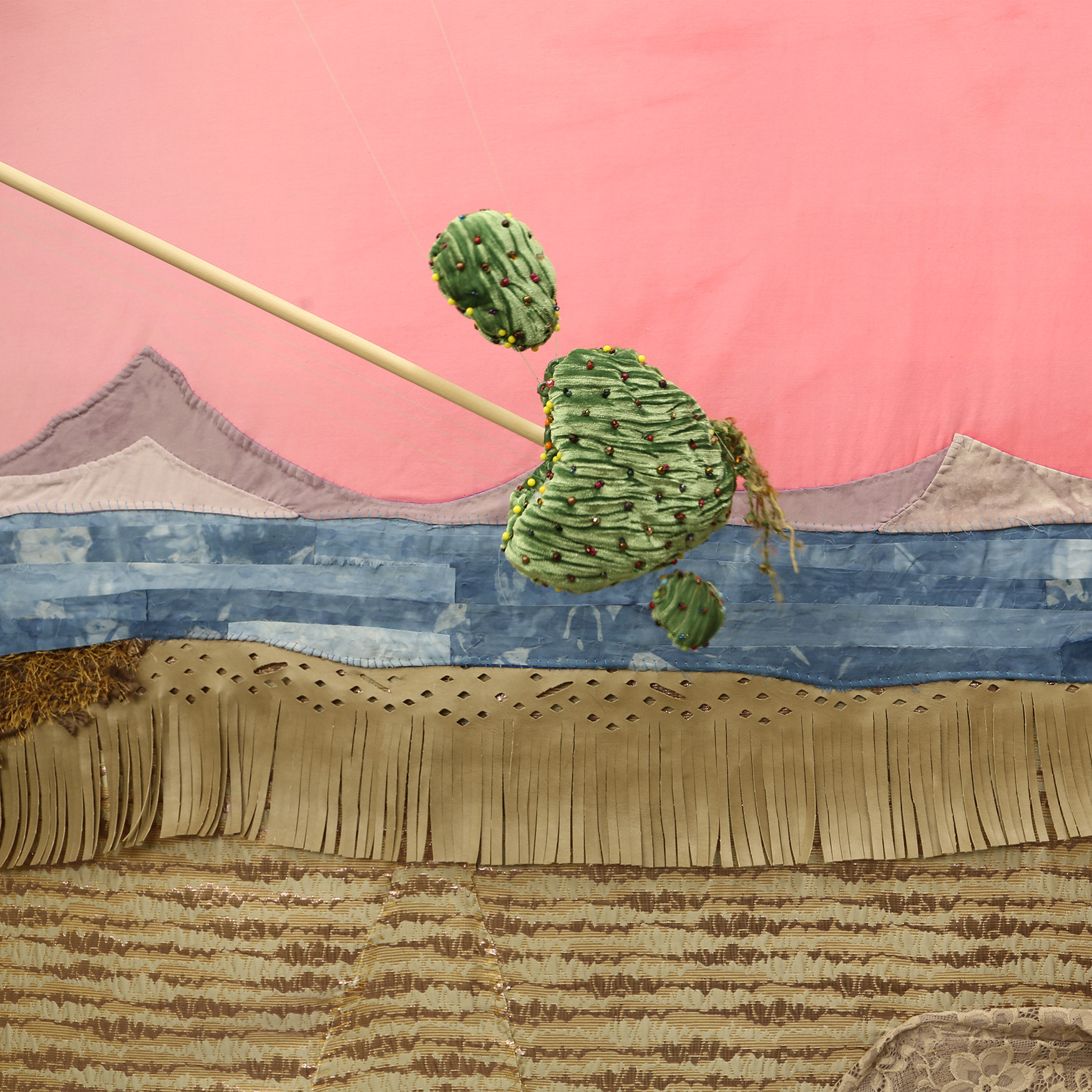
Allison Morones
Wild Cactus, 2026
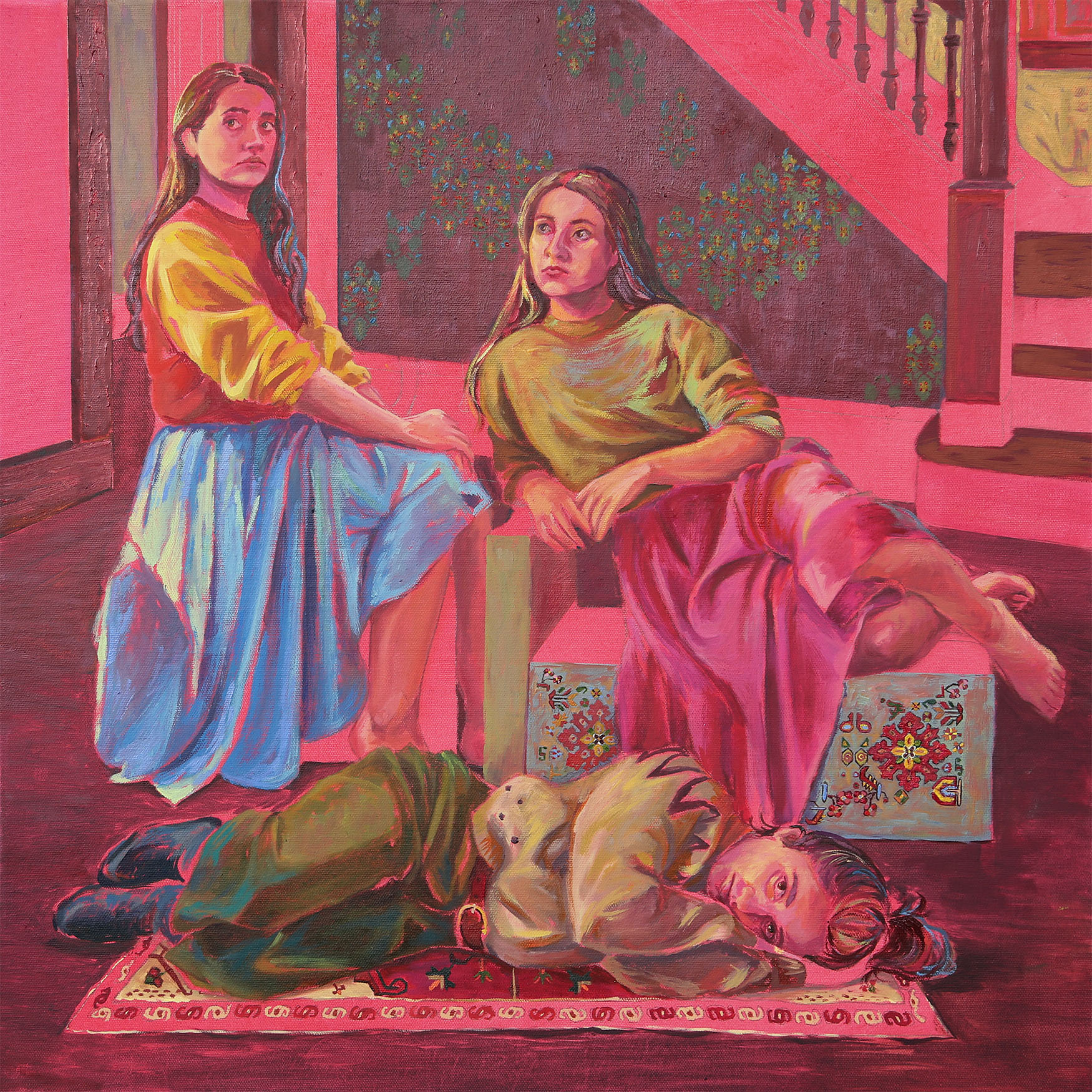
Sarah Valinezhad
The Ache Under My Skin, 2024
Oil on canvas
24 x 24 in
Allison Morones is a theatrical designer, fabricator, and textile artist based in Massachusetts. Born and raised in the Southwest, she received her BFA in Costume Design and Technology from the University of Arizona. After graduation she became the resident costume designer at Walnut Hill School for the Arts in Natick, MA (2019-2023) working on dance, opera, and theatre productions. Morones often teaches theatrical design and puppet construction at Creative Arts at Park in Brookline, MA and currently teaches at UMass Dartmouth in the fashion department. She instructs both illustration and construction courses to undergraduate students while being an MFA candidate in Fibers. Morones writes and develops her own original autobiographical theatrical productions about the Southwest, showcasing her craftsmanship as a puppet fabricator, performer, and textile artist. Her passion for education, textile construction, and theatre design make her a well-rounded artist, inventing new methods and developing new curricula.
The driving force behind my work is storytelling—specifically, the exploration of how humans seek to be understood. Since childhood, I have been enthralled by live performance and the incomparable, fleeting energy shared between the performer and the artist. To me, the act of suspending disbelief to engage in imaginative fantasy with others has no age limit, nor has it ever wavered in importance throughout human history. This has inspired me to be a theatrical designer and fabricator. My career as a theatre designer has been focused specifically on the development of characters and an intimate understanding of the psychological motivations that drive an individual. As a costume designer and puppet fabricator, my medium remains in fiber arts, which has allowed me to create elaborate new characters and stories using traditional sewing and patterning techniques. Conceptually, my work often explores the "emotional scars" of childhood, cloaked in fantasy and viewed through rose-colored glasses. I am interested in how visceral memories—both joyous and painful—shape our perception of reality. As a multidisciplinary fiber artist, my current focus is the creation of new live theatrical productions. I love telling stories and entertaining people with the joys and sorrows of human experience, and exploring the ways in which our uniqueness and our universality are simply two sides of the same coin.
Sarah Valinezhad is an Iranian artist and educator based in Massachusetts. She is an MFA candidate in Illustration at the UMass Dartmouth, where she also teaches foundation-level studio and digital media courses. Her work has been exhibited at the New Bedford Art Museum, the Cultural Center of Cape Cod, the Peninsula Art League National Fine Art Show in Washington, the 10th Annual Kehler Liddell Gallery Juried Show in Connecticut and most recently for the 8th Louisiana Biennial at Louisiana Tech University. She has been recognized by the Graphis New Talent Awards, Women Artists on Rise Artbook, and 3x3 International Illustration Magazine. Valinezhad has also contributed to community arts programming, museum education, and summer youth art camps across New England. She continues to build a practice shaped by storytelling, teaching, and the commitment to creating images that hold depth, presence, and humanity.
Domestic space is central to my practice. Interiors compress, fracture, or repeat, echoing the way memory accumulates rather than unfolds linearly. Figures appear suspended within these rooms, caught between stillness and movement, visibility and concealment. Rather than illustrating specific narratives, I build atmospheres that allow emotional states to surface indirectly, inviting viewers to remain with ambiguity and emotional tension. My work is deeply informed by Iranian women’s lived experiences and the ongoing fight for freedom in Iran. Personal memory merges with collective history, shaping images rooted in domestic life yet charged with political urgency. The home appears as both refuge and site of constraint, where care is inseparable from control and intimacy exists alongside fear. Within these spaces, the body becomes a vessel for intergenerational memory, carrying traces of endurance, resistance, and survival. Materially, my process is slow and accumulative. I build, disrupt, and rework surfaces, allowing evidence of revision to remain visible. This approach reflects my interest in emotional residue and transformation, where meaning emerges through repetition rather than resolution. Ultimately, my work seeks to make visible the emotional architectures that shape women’s lives in Iran and beyond. By foregrounding interior spaces and the bodies that inhabit them, I aim to honor vulnerability alongside defiance, and to mark the continuous fight for freedom as something lived quietly, persistently, and intimately.
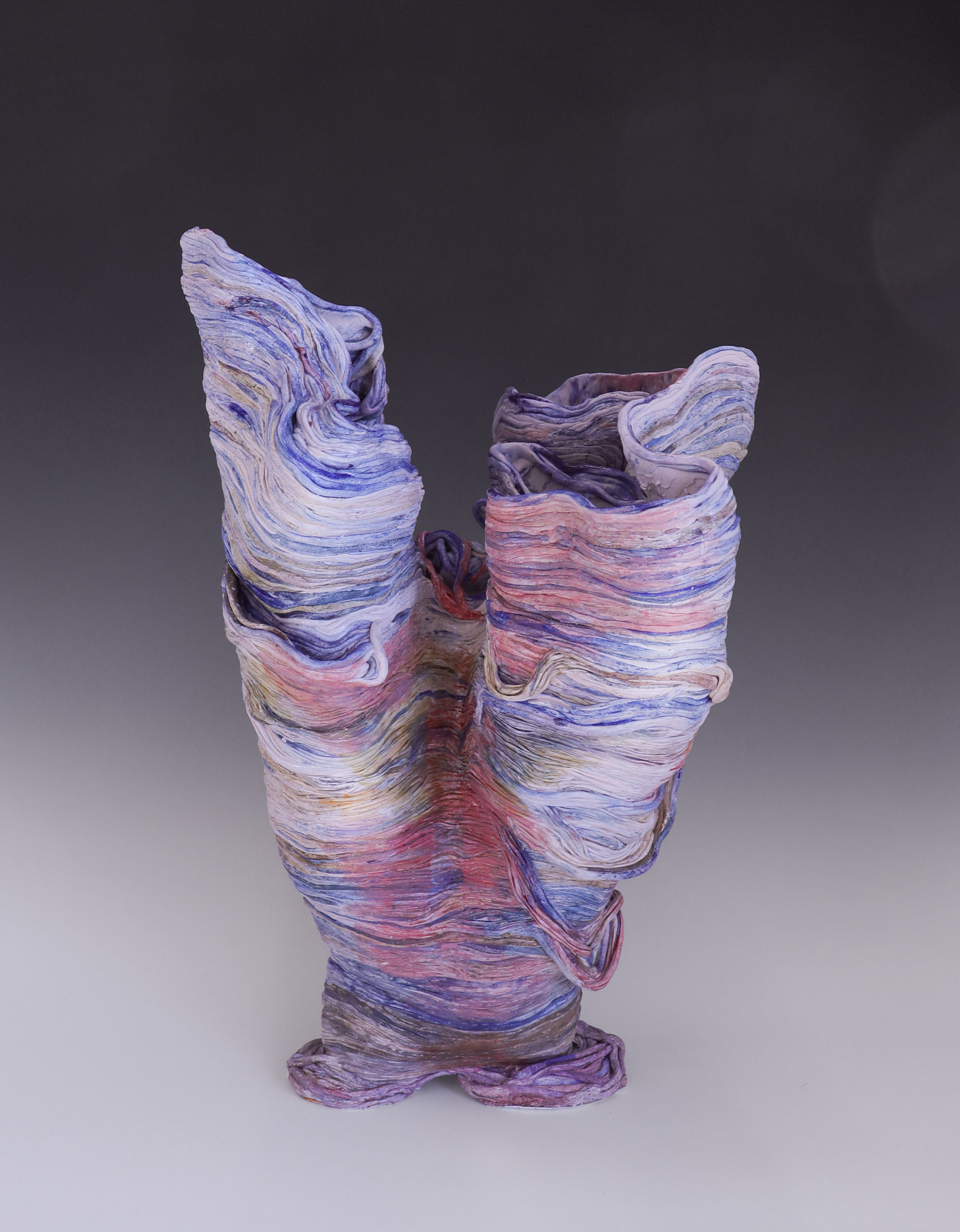
Yaren Yildiz
İçi Beni, Dışı Seni (The Series of Internal States without External Lines), 2026
Mid- fired Porcelain, underglazes, glazes and mason stain
20 x 13 x 11 in
Yaren Yildiz is a multidisciplinary artist from Turkey, based in New Bedford, Massachusetts. She received her BFA in Fine Arts from Bilkent University, Turkey as the valedictorian of the Faculty of Art, Design, and Architecture. Yildiz is currently pursuing an MFA in Ceramics at UMass Dartmouth, where she holds a Teaching Fellowship and teaches Foundation Drawing and Handbuilding Ceramics. She previously worked as an assistant instructor in Art History and Film & Media Studies. Yildiz has expanded her practice through ceramics workshops and a residency in Berlin Art Institute, Germany and has exhibited regionally and internationally, including Galeri Nev with Merdiven Art Space (parallel to the 18th Istanbul Biennial), an open studio in Berlin Art Institute, Germany, University of North Carolina Asheville, and Hatch Street Studios in New Bedford, MA.
Through ceramics and drawing, Yaren Yildiz explores the body as sensation, visceral, tactile, and in flux. Across mediums, Yildiz hopes to elicit a gut reaction from viewers that goes beyond the visual. Her hand-built ceramic sculptures, shaped through layered coils and slabs, evoke internal states without external lines. They recall organs, fragments, living creatures, forms that resist logical definition yet pulse with their own biological rhythm. Yildiz approach clay as a sentient material, a kind of biological hardware that stores touch and emotion. Each layer holds memory, pressing, stretching, and merging until the surface becomes a record of movement and tension. The clay’s sensitivity turns it into a skin fragile, porous, and alive. In her ballpoint pen drawings, form emerges through accumulations of fine, layered lines, much like the coils in her sculptures. These drawn surfaces echo the same visceral impulse, an attempt to feel her way into the body through texture, density, and touch. Yildiz’s works inhabit the threshold between becoming and disintegration, where touch replaces vision as the primary sense. Through this process, Yildiz seeks to translate the invisible pressures of being, those internal sensations that live beneath the surface into form.