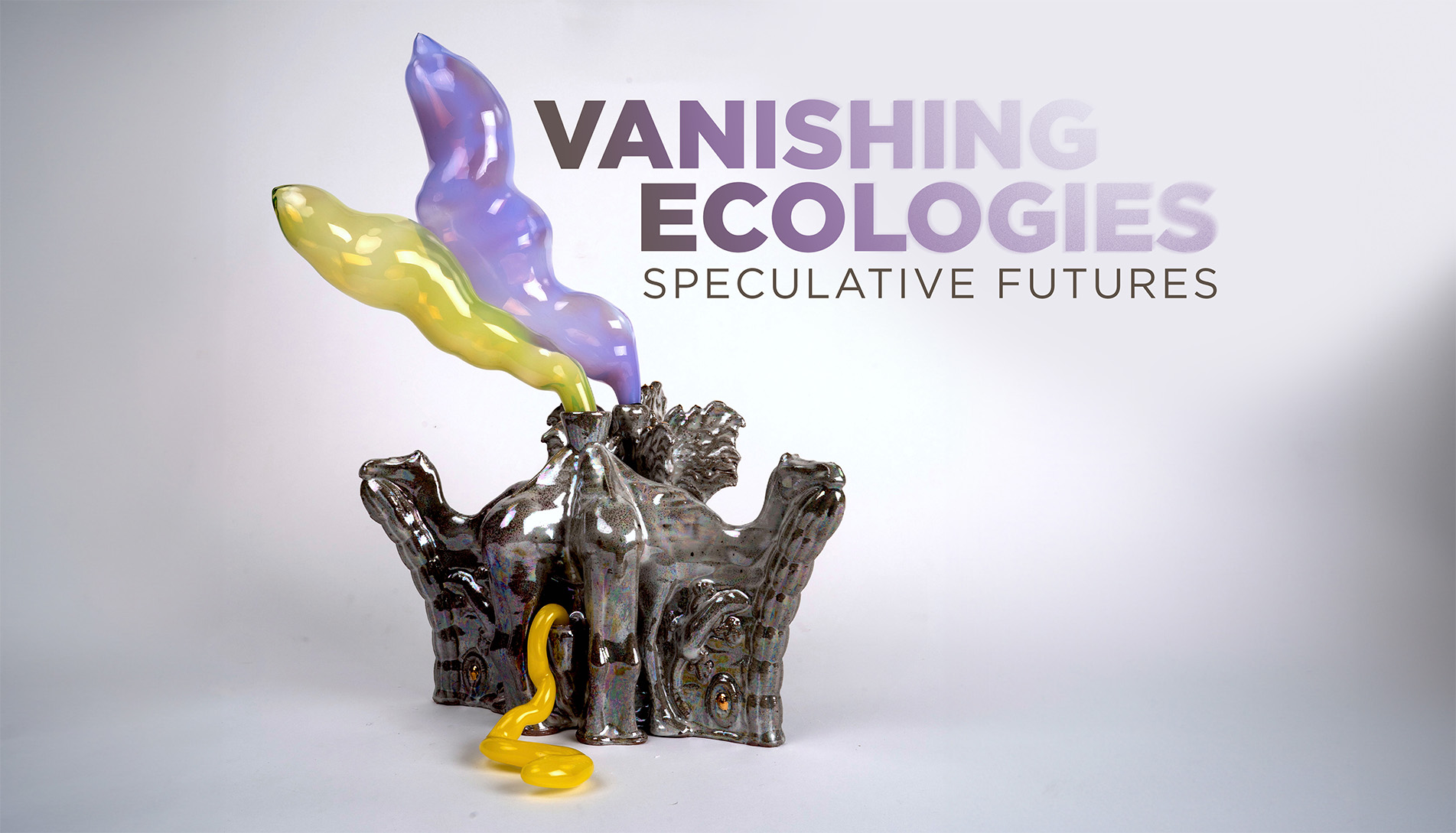
Lemaire & Touron, Nature 21 (2023)
3D printed stoneware and borosilicate
15" x 11" x 21"
Vanishing Ecologies: Speculative Futures
JUNE 25 - OCTOBER 11, 2026
Vanishing Ecologies: Speculative Futures brings together an international group of contemporary artists working across sculpture, installation, painting, photography, sound, and time-based media. The exhibition examines artistic responses to the Anthropocene, a period characterized by the irreversible impact of human activity on the planet, and considers potential futures that may arise as a result.
Through immersive and materially innovative works, Vanishing Ecologies addresses climate change, mass extinction, environmental toxicity, and the enduring legacy of the atomic age. The exhibition examines the increasingly complex relationships among technology, ecology, and time. Some artists investigate the fragile boundary between collapse and adaptation, while others envision post-human futures, ecological resilience, and planetary memory.
Throughout the exhibition, artists translate ecological questions into experiences that are simultaneously material, emotional, and speculative. Representations of extinct species, consumer waste, fragile glass forms, contaminated landscapes, organic growth, and imagined future artifacts serve as frameworks for considering a planet in transition. These works navigate the intersection of scientific inquiry and artistic invention, tracing the intricate relationships among human activity, technological systems, and the living world. Rather than solely documenting environmental crises, Vanishing Ecologies investigates how art can expand the capacity for imagination. The exhibition encourages viewers to reflect on memory, resilience, and deep time, while contemplating futures that remain uncertain, interconnected, and evolving.
The exhibition features works by Rachel Berwick, Thomas Deininger, Beth Lipman, Aimée Lamaire, Minga Opazo, Rachel Ostrow, Anaïs Tondeur, and Nicolas Touron.
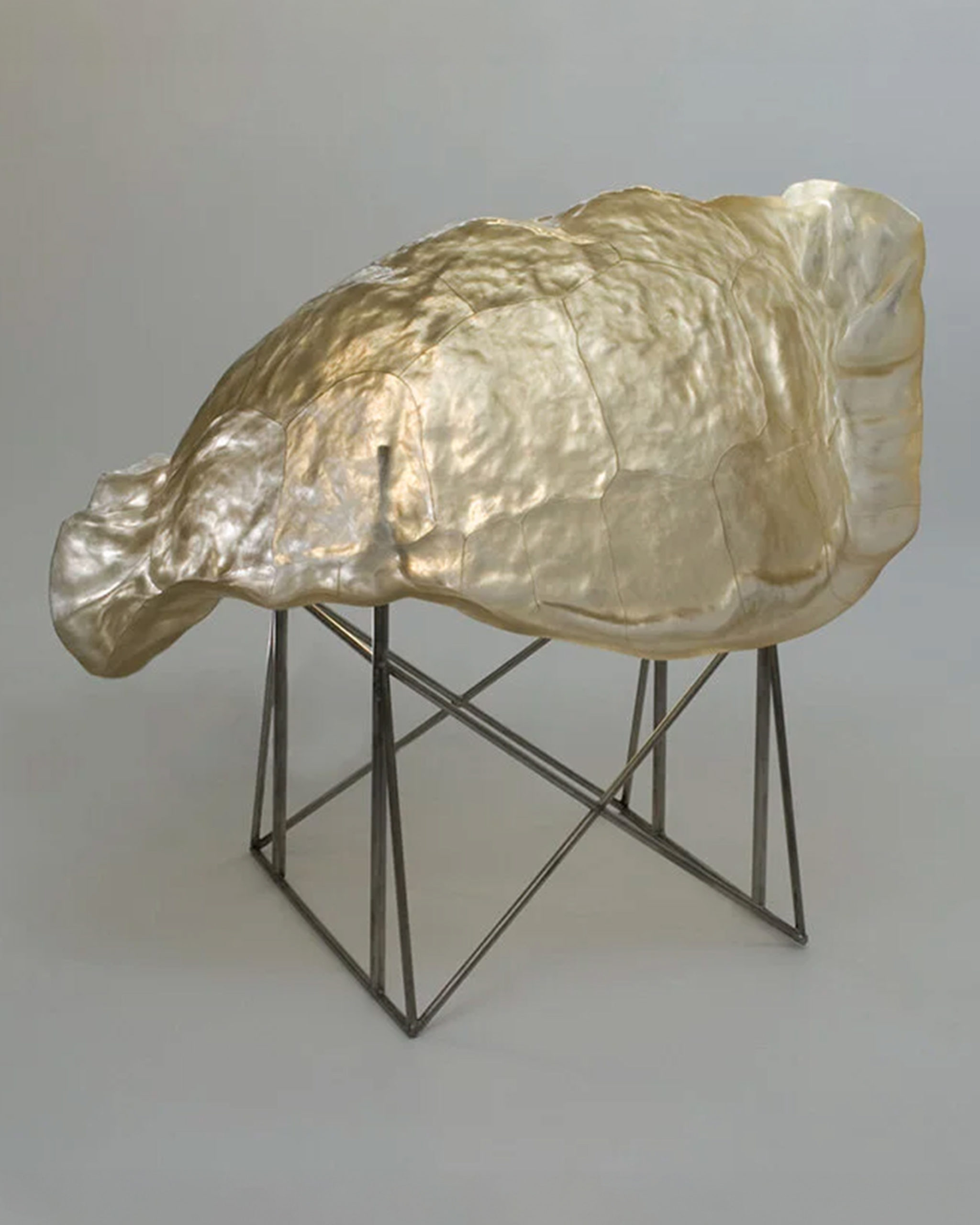
Lonesome George (2024)
Rachel Berwick
Cast Resin and Stainless Steel
40" X 30" X 42"
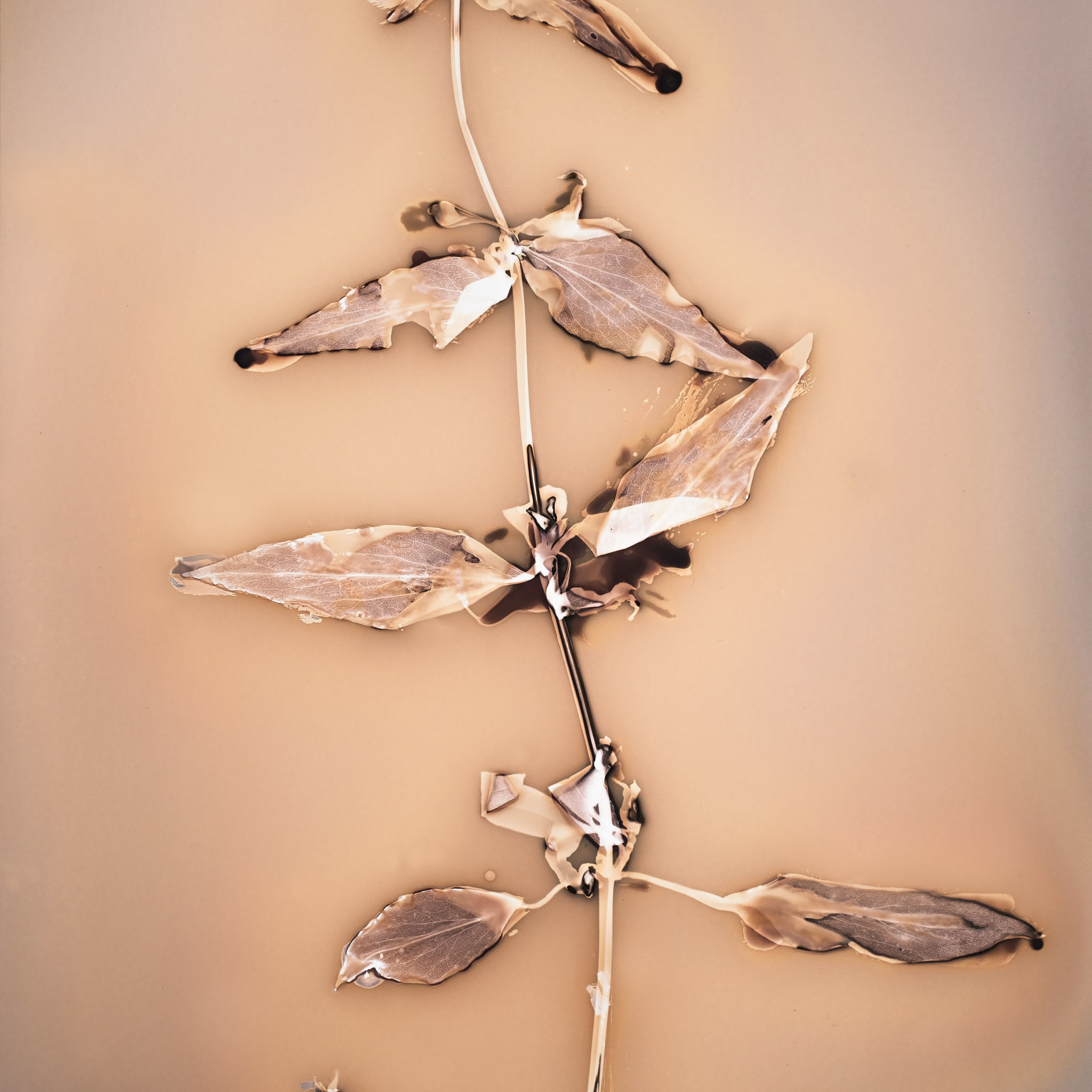
Valerianaceae Località Pozzelle, ex discarica Cava SARI Terzigno (2020)
Anais Tondeur
Photography
9.45 x 11.8 in.
Rachel Berwick’s multi-media installations examine the threshold between nature and culture as a means of exploring themes of extinction and loss, and our inevitable desire to recover what is lost. She has had five solo exhibitions in New York—“Lonesome George,” at Sikkema Jenkins in NYC was also included in “Becoming Animal” at Mass MoCA. Her installation, “Zugunruhe” was exhibited at Brown University and The Smithsonian American Art Museum.
For over twenty years, she has developed and maintained a work titled “may-por-é,” in which live parrots she trained to speak, Maypuré, an extinct indigenous South American language, live in a sculptural aviary, exhibited at venues such as The Serpentine Gallery, London, the 7th International Istanbul Bienal, and the 26th Bienal de São Paolo.
Berwick received a Robert Rauschenberg Residency, a Joan Mitchell Foundation Fellowship, and a Smithsonian Artists’ Research Fellowship where she first began working on bird migration and structural color in the project titled, “Blue,” a series of sculptural works that she continues to develop today. Berwick’s exploration of structural color has expanded to include Gold Ruby Red, the Ruby Throated Hummingbird, and the stories hummingbirds carry with them through time and space.
FLOWERS OF FIRE
IN COLLABORATION WITH MICHAEL MARDER 2024–25
Correspondance, Phytographic prints on paper, 24 x 30 cm & 13 x 18 cm
Interweaving photography and ecology, botany and philosophy, this project is developed in companionship with ruderal plants in extreme soils of the Anthropocene, the Terra dei Fuochi and in the volcanic area of Vesuvius, in the Naples region.
Cultivated during an artist’s residency at Spot Home Gallery, Naples under the guidance of scientists and inhabitants of the land, FLOWERS OF FIRE takes the form of a correspondence between the artist Anaïs Tondeur, the philosopher Michael Marder, and communities of plants which, in Roman times, cured people before the eruption of Vesuvius, and today participate in the healing of soils marked by the consequences of the incineration and burial of toxic waste in the depths of the Terra dei Fuochi.
According to certain botanists, ruderal plants overproduce a molecule known as phenol when growing in heavily polluted soil. Via the photographic gesture, Anaïs Tondeur collects this excess of phenol using a process known as phytography. Without extracting the plants from their soil, she relies on sunlight to expose their bodies, and on a natural chemical reaction between the phenolic molecules and the photosensitive surface - a paper or textile collected from landfills and photosensitized to light.
Reviving the ritual of the poet and herbalist Emily Dickinson, who enclosed dried plants in her correspondence (or sometimes included her poems in flower arrangements), the photographer sends these other-than-human writings to the philosopher Michael Marder, who responds with a series of letters addressed to each plant. After receiving the letters, the photographer returns to the plant to read the philosopher’s words, while collecting a new phytography of the plant.
From leaf to leaf, through words and images, these gestures are created in the sense of the medieval etymology of the term ‘correspondence’: ‘to harmonise with’, ‘to enter into a relation with”. In this way, the philosopher and the photographer open up spaces for encounters with these plants of the margins, forgotten by our ecological unconscious. In a landfill turned into an open-air photographic laboratory, they weave intimate bonds with these expressions of ecological vitality which grow in the ruins of capitalism.
FLOWERS OF FIRE is supported by Spot Home Gallery, Naples, laureate of the French Institute's MIRA program - Mobilité Internationale de Recherche Artistique - and of the Prix Photographie & Sciences initiated by the Résidence 1+2, the French Ministry of Culture, Adagp, the CNRS, Stimultania (associated venue) and Picto Foundation, as well as media partners Fisheye and Sciences et Avenir - La Recherche.
Anaïs Tondeur. Born in 1985. Works and lives in Paris.
Attending to the invisible materialities of air and climate, plants and soil, Anaïs Tondeur develops photography-based investigations conceived as anthropological tools. She captures images at the interstices of bodies and environments, in sites marked by human activity, where she cultivates novel engagements that point toward alternative forms of relation and photographic materiality.
Rooted in the early grammars of analogue photography, her practice unfolds as a slow composition of time, chemistry and ecological care. Through processes attentive to their own material entanglements, she comes to dwell within the image as a sensitive membrane: a porous, listening surface that receives and renders perceptible the presence of beings ordinarily eclipsed by dominant regimes of visibility. Photography here sheds its claim to representation to become a threshold: a site of passage across which forms of life otherwise unseen may speak, shimmer, or resist. In this gesture, the image becomes a mode of kinship, a way of attuning to the agencies of a more-than-human world.
Trained at Central Saint Martins and the Royal College of Art (London), Anaïs Tondeur works at the intersection of ecological thinking and poetics. Her practice has been supported by numerous awards and honours, among them the Grand Prix RPBB (2024), the Prix Photographie et Sciences — Résidence 1+2 (2023) and the Prix Art of Change 21 (2019), alongside recognition from Ars Electronica (Honorary Mention, CyberArts) and the Friends of the Jardin Albert Kahn (2024).
She has been invited to research and creation residencies that resonate with her enquiry into terrestrial materialities and agencies: at Maison Ruinart (Reims, 2026), Artium (Vitoria, 2025), Spot Gallery (Terra dei Fuochi, Italy, 2024), the Natural History Museum of Neuchâtel (Switzerland, 2023) and the former seed vault of the Vilmorin family (2020–21). Her fieldwork has also taken shape through collaborations with the Musée des Arts et Métiers and the CNES (2019), and with the Chaire Arts & Sciences (École polytechnique, 2012–13), including a residency at the Muséum national d'Histoire naturelle and the Institut Pierre et Marie Curie during COP21 (2015).
Her work has been exhibited internationally, at institutions such as the Centre Pompidou and the MEP (Paris), the MAMAC (Nice), Emergent Ecologies at the Serpentine Galleries (London), the Kröller-Müller Museum (Netherlands), the Museum Ostwall and the Museum für Kunst und Gewerbe (Germany), Kunst Haus Wien (Austria), the Chicago Art Center and the Spencer Art Museum (USA), the Choi Center (Beijing), and the Nam June Paik Art Center and Sungkok Art Museum (Seoul).
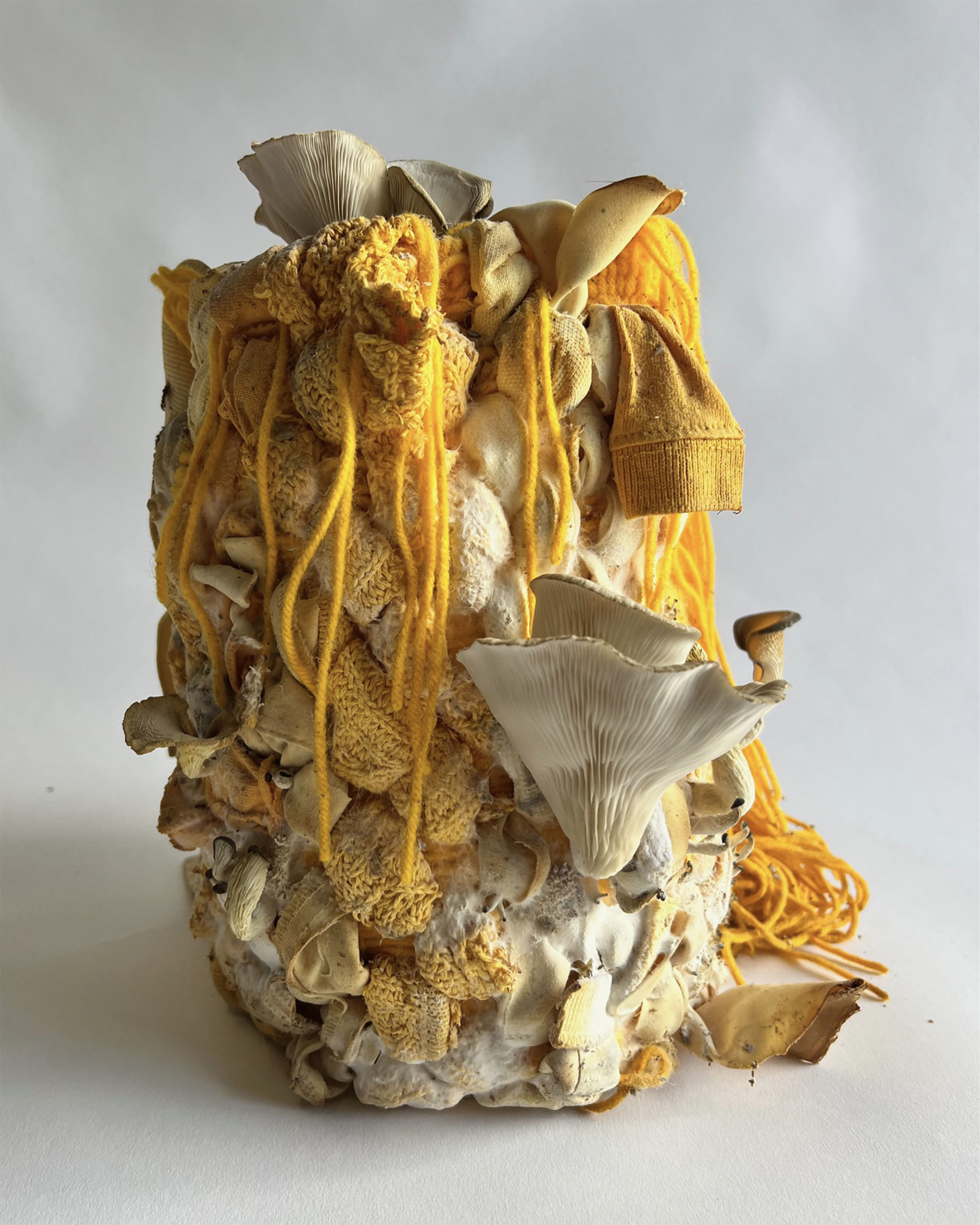
Re-woven (2026)
Minga Opazo
Textile Waste, Oyster Mushroom Mycelium
Dimensions Variable
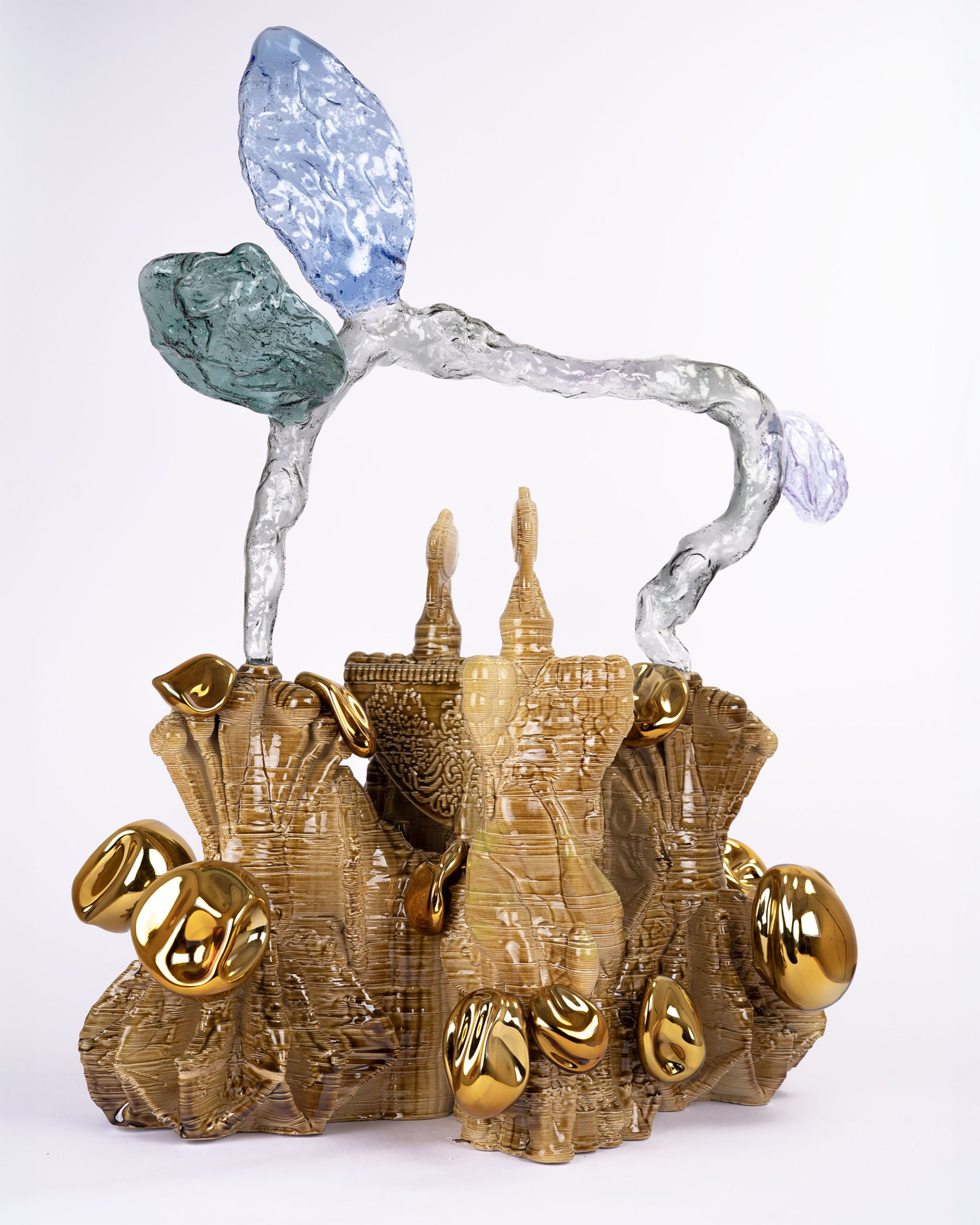
Aquarius 24 (2026)
Lemaire & Touron
3-D Printed Porcelain and Borosilicate
20 x 15 x 30 in.
Minga Opazo is a fourth-generation textile crafter who explores the relationship between climate change, contemporary textile production, and Chilean textile history and design. Born in Chile, Minga immigrated to Los Angeles at the age of 16. Opazo recent works, questions the textile industry by creating a series of cultural works that explore the idea of solastalgia, a term which describes the mental or existential distress caused by environmental change and living in an era of excess, constantly consuming and throwing away.
In her practice, she is dedicated to research the textile industry further and to create work that exposes, reflects and finds a solution to the current situation of the textile waste industry. She completed her BFA at University of California, Berkeley in 2016 and her MFA at California Institute of the Arts, 2020.
Opazo exhibited works across the US and Latino America, including the Museum of Visual art of Santiago, Chile,ACRE gallery in Chicago and the Bunker Art Space, The Sheperd Detroit. In Los Angeles, her work has been shown at the MAK Center for Art and Architecture Gallery, Sargent Daughters West, Various Small Fires.
She has been awarded with various residency including Banff art center, ACRE residency and Haystack mountain school of craft, Anderson Ranch Art center, Mass Moca and Bemis Art center. She recently had her work published at Artforum, White wall art magazine and American Science.
Solastalgia names a quiet but persistent distress: the feeling of remaining in place while the environment around you changes beyond recognition. Unlike nostalgia, which longs for elsewhere, solastalgia is experienced in real time. It is the discomfort of witnessing loss as it unfolds,through climate change, industrialization, and environmental degradation.
My work is grounded in this condition. We are living in what is increasingly described as the Plasticene Epoch, a moment defined by the accumulation of plastic as a geological force. I am interested in how this material reality shapes our emotional and physical landscapes, and how constant environmental change produces a subtle, often unspoken grief. Rather than dramatizing collapse, I focus on its quieter aftermath the slow, ongoing transformations we learn to live with.
Textiles are central to this inquiry. Clothing has always been fundamental to human survival and cultural identity, yet contemporary systems of fast fashion have turned textiles into toxic waste. Synthetic fibers now contribute significantly to plastic pollution and carbon emissions, transforming an ancient, cyclical practice into a linear system of extraction, consumption, and disposal. This contradiction between care and harm, necessity and excess—runs through my work.
Through BioArt, I investigate how textile waste might be reimagined rather than discarded. I work with fungi, specifically oyster mushrooms (Pleurotus ostreatus), to explore its capacity to break down synthetic materials and return them to soil. By collaborating with mycelium’s natural processes of decomposition, I treat decay not as failure, but as potential. My work seeks to transform waste into something generative, proposing a future in which damaged materials and damaged systems can be metabolized, repaired and renew.
Amy Lemaire & Nicolas Touron develop sculptural systems at the threshold of glass, ceramics, and computational fabrication, where material processes become a way to think through how nature is already entangled with technological culture. Their work originates in a sustained, ongoing collaboration grounded in shared research, dialogue, and studio-based experimentation, where authorship is intentionally blurred into a single evolving practice.
Together, they examine how contemporary life reorganizes perception of “natural” form—no longer as something separate or pure, but as something continuously reconstructed through tools, systems, and image-making. By combining 3D-printed porcelain with handblown glass, they stage a dialogue between slow bodily craft and machine-generated structure. The resulting forms do not illustrate nature; they behave like speculative residues of it—fragments of possible worlds where biology, architecture, and data logic converge.
Across the Nature series and The Age of Aquarius, the work develops as post-anthropocenic myth-making. Porcelain bases suggest ruins, fortresses, or future infrastructures, while glass elements evoke organisms suspended between growth and artifact. The practice asks what stories objects carry when nature is no longer a backdrop but a constructed, unstable condition.
Nicolas Touron is a storyteller. Born in France, he graduated from the Gerrit Rietvelt Academy in Amsterdam before coming to the USA with a Fulbright grant to complete an MFA at School of Visual Art (SVA) in New York City where he currently teaches. Nicolas Touron’s work has been featured in art galleries, museums, and public spaces in both the U.S and abroad. His work is in numerous private and public collections around the world. Residencies and awards include Lower Manhattan Cultural Council Space, Socrates Sculpture Park, PowerHouse NY and Harvard ceramic Program.
Amy Lemaire is a multi-disciplinary artist based in Brooklyn, N.Y. She earned a BFA from School of the Art Institute of Chicago and an MFA from Pratt Institute in Brooklyn, N.Y., where she studied painting and contemporary art. She has taught at UrbanGlass in NYC, Salem Community College in N.J.; Pilchuck Glass School in Wash.; and Penland School of Crafts in N.C. Lemaire has exhibited at SOFA New York, SOFA Chicago, Bijoux at the Norton Museum (Fla.), Glass Weekend (N.J.). Lemaire was a 2015 resident artist at the Museum of Arts and Design in NYC as a part of the Artists’ Studios Program, and the recipient of a 2015 CGCA Flexible Fellowship at Wheaton Arts.
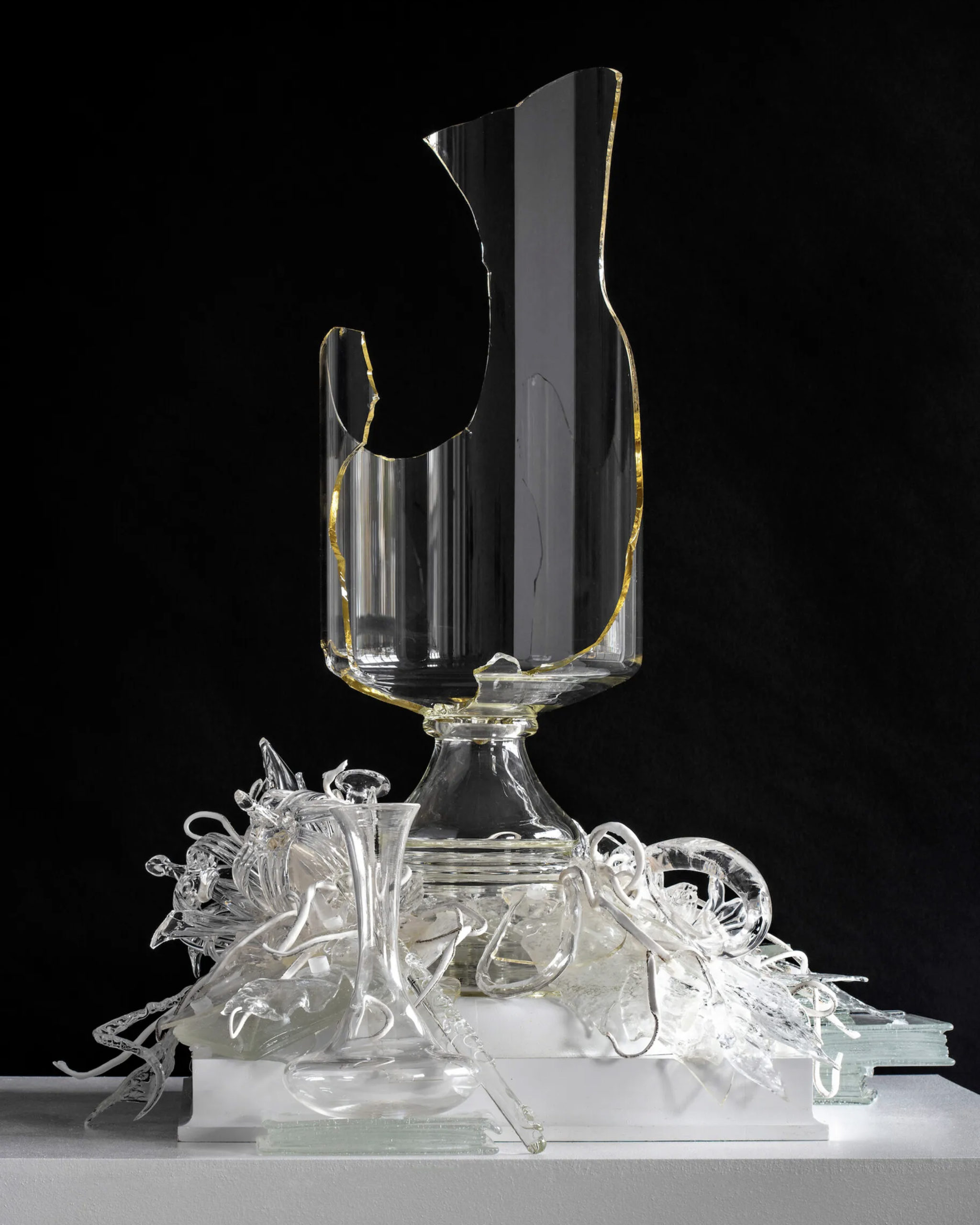
Lapsed Concession (2018)
Beth Lipman
Glass, Wood, Enamel, Adhesive, Paint
33 x 30 x 27 in.
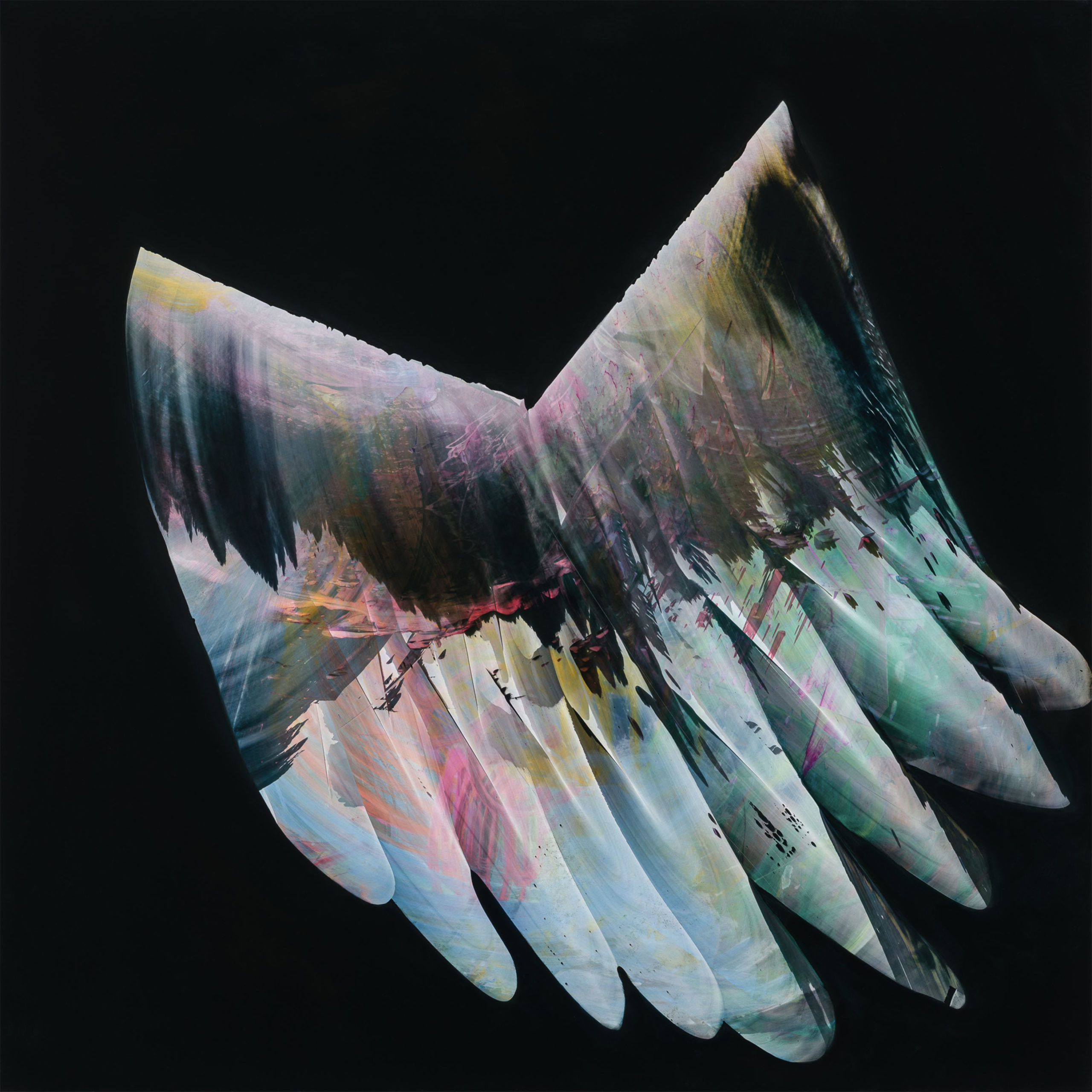
The Traveler, 2020
Rachel Ostrow
Oil on Panel
48 x 48 x 2.125 in.
Lipman has exhibited her work internationally at such institutions as the Ringling Museum of Art (FL), ICA/MECA (ME), RISD Museum (RI), Milwaukee Art Museum (WI), Gustavsbergs Konsthall(Sweden) and the Renwick Gallery of the Smithsonian American Art Museum (DC). Her work has been acquired by numerous museums including the North Carolina Museum of Art, Brooklyn Museum of Art (NY), Kemper Museum for Contemporary Art (MO), Smithsonian American Art Museum (DC), Jewish Museum (NY), Norton Museum of Art, (FL), and the Corning Museum of Glass (NY). ReGift, a site specific installation investigating the life of Florence Scott Libbey, is on view at the Toledo Museum of Art.
Lipman has received numerous awards including a USA Berman Bloch Fellowship, Pollock Krasner Grant, Virginia Groot Foundation Grant, and a Louis Comfort Tiffany Foundation Grant. She has been an Artist in Residence at the Alturas Foundation, the John Michael Kohler Arts Center’s Arts/Industry Program, and the Smithsonian Artist Research Fellowship. Recent works include Living History, a large scale site-specific commission for the Wichita Art Museum (KS) that investigates the nature of time and place and Belonging(s), a sculptural response to the life of Abigail Levy Franks for the Crystal Bridges Museum of American Art (AR).
Beth Lipman is an American artist whose sculptural practice generates from the Still Life genre, symbolically representing the splendor and excess of the Anthropocene and the stratigraphic layer humanity will leave on earth. Assemblages of inanimate objects and domestic interiors, inspired by private spaces and public collections, propose portraits of individuals, institutions, and societies.
Temporality and mortality-primary concerns linked to the Still Life tradition-are heightened through materiality. Works in glass, wood, metal, photography, and video disrupt the mechanisms of fixed, grand narratives in order to emphasize evanescence at the heart of ‘vanitas’. Sculptural processes become analogies for life cycles, pointing to systems both natural and human that must continually adapt in order to survive.
The works are a meditation on our relationship to Deep Time, a monumental time scale based on geologic events that minimizes human lives. Each installation is a reimagining of history, created by placing cycles often separated by millenia in proximity, from the ancient botanical to the cultural. The incorporation of prehistoric flora alludes to the impermanence of the present and the persistence of life. The ephemera of the Anthropocene becomes a symbol of fragility as the human species is placed on a continuum where time eradicates hierarchy.
My paintings are filled with the energy of chance and discovery. Existing somewhere between what is recognizable and what is otherworldly or abstract, they play with form, space, movement, light and character. They indulge in the mystery and changeability of perception and give authority to the viewer’s imagination to navigate their own visual experience.
I am fascinated by the interconnectedness of the body and the mind and how physical movement and gesture can create visual illusions of space and form. Painting with a squeegee, I unearth images by spreading transparent paint around on a slippery panel. I add paint with a brush and throw paint and mediums at the surface. Then, with varied speed, pressure and gesture, I draw over those marks with the squeegee. The paint combines under pressure from the rubber blade and mixes based on its material properties. When the colors and mediums are pushed together, they form detailed passages that are irregular and mimic the natural world.
The gesture of my mark is (somewhat) controlled, but the way the paint reacts underneath it is not. The paintings exist as physical records of movement, both natural and woman-made. They embody the relationship between intention and chance, echoing the dynamic in our universe between order and chaos.
Rachel Ostrow is a Brooklyn-based painter and printmaker. She earned an M.F.A. in painting from Hunter College, a post-baccalaureate degree from the Maryland Institute College of Art, and a B.A. in Fine Arts from Wesleyan University.
She has had solo exhibitions at Morgan Lehman Gallery (Manhattan, NY), Planthouse (Manhattan, NY), The Cill Rialaig Project (Ballinskelligs, Ireland), 42 Social Club (Lyme, CT), Sunday Takeout (Brooklyn, NY), The Kenan Center (Lockport, NY), John Davis Gallery, (Hudson, NY), Saffron (Brooklyn, NY), and Todojunto Gallery (Barcelona, Spain). She has been included in exhibitions in Brooklyn, Manhattan, Montreal, Joshua Tree, CA, Santa Barbara, CA, Great Barrington, MA, and Toledo, OH.
She has been awarded residencies at the Cill Rialag Project (Ballinskelligs, Ireland), The Vermont Studio Center (Johnson, VT), The Kimmel Harding Nelsen Center (Nebraska City, NE), The Millay Colony (Austerlitz, NY), The Joshua Tree Highlands Artist Residency (Joshua Tree, CA), and The Gowanus Studio Space (Brooklyn, NY).
Her work is included in the public collections of the Burchfield Penney Art Center, Capital Group, Fidelity and the Montefiore Einstein Hospital. It has been written about in Artforum, The New York Times and The Niagara Gazette.
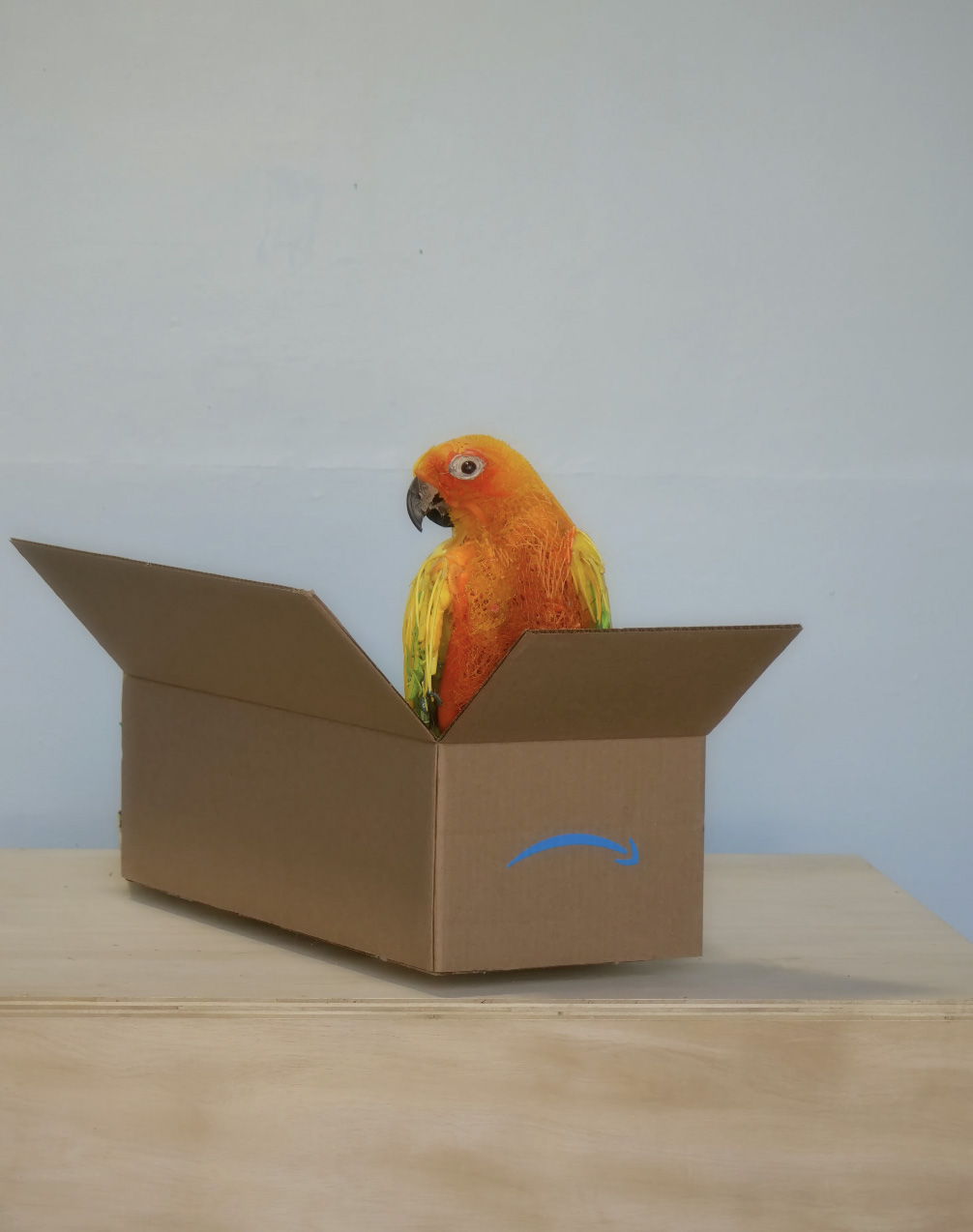
Killing the Amazon (2025)
Thomas Deininger
Found Objects on Plywood
12 x 18 x 33 in.
Thomas Deininger is a Rhode Island based artist whose work combines environmental concerns with an innovative approach to image making. His found object assembalges are constructed from non-recyclable, non-biodegradable materials that pile up in our nations landfills.
Works like this provide a thoughtful response to mass consumerism. He asks the viewer to reconsider the potential for transcendence of the mundane.
His works are in many private and public collections though out the world.
Modern humans have a tendency to separate themselves (ourselves) from the “natural” world, not understanding, in whatever form we take, or expressions we make that we are merely an extension of it. We are entirely of and part of this world we subjugate.
When I create these foolish allusions I try to consider this concept and attempt to understand all the infinite and varied ways that “nature” solves problems or provides solutions to strategies of existing or being….This is what we call life. The process of composting obviously has a huge influence on my work.
With these absurdist sculptures I want to psychologically and philosophically bridge the gap between our “perceptions” of this assumed division between culture and nature.
The pieces can be seen as social critiques, homages to creatures that we share the planet with, or hopelessly ineffective, highly irrational solutions to existential anxieties over our current environmental situation and our collective inactions with those challenges.